
High-comfort safari travel and the new responsibility of the lodge
There is a particular danger in safari travel: the belief that wilderness exists for the convenience of the guest.
It does not.
The best lodges understand this. They know that wildlife is not entertainment, forests are not scenery and sightings are not deliverables. A tiger, despite what some itineraries imply, is not a scheduled appointment. The role of a good lodge is not to command the wild, but to interpret it, protect its dignity and send guests home with a little more intelligence than they arrived with.
The Oberoi Wildlife Resorts India brings one of the country’s most refined hospitality traditions into its wilderness landscapes. The Oberoi Vindhyavilas Wildlife Resort, Bandhavgarh, sits near Bandhavgarh National Park in Madhya Pradesh, one of India’s celebrated tiger landscapes. Oberoi’s official site notes that Bandhavgarh National Park spans 505 square kilometres, with a 105-square-kilometre core zone and a 400-square-kilometre buffer zone, and that the resort is a short drive from the park.
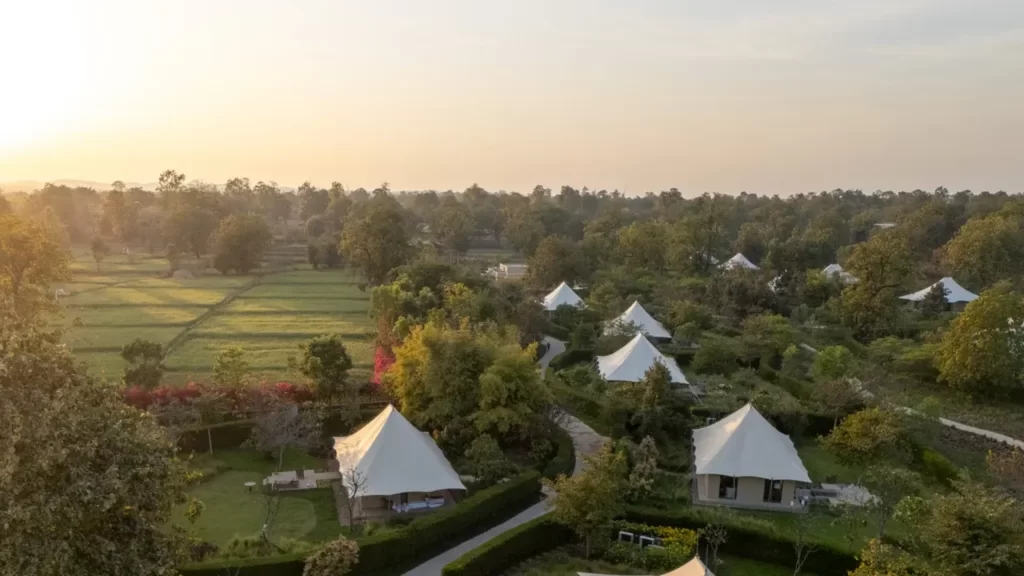
What makes the proposition compelling is not simply comfort, though there is comfort in abundance. It is the attempt to place luxury in service of the landscape. Wildlife travel at this level can do something valuable: attract attention, build appreciation, support interpretation and encourage guests to see conservation not as a specialist concern, but as central to the experience. A safari becomes not only a search for animals, but a lesson in habitat, patience and restraint.
Red Earth Good Living and Hospitality takes a different but equally thoughtful route. At Red Earth Kabini, the resort sits on the backwaters of the Kabini Dam, with experiences including early morning walks, safaris in Nagarhole National Park and coracle rides. Its philosophy places responsible and sustainable tourism at the centre, with rewilded gardens, eco-friendly cottages built around trees, pesticide-free organic farms and the creation of a lake that supports birds and animals.
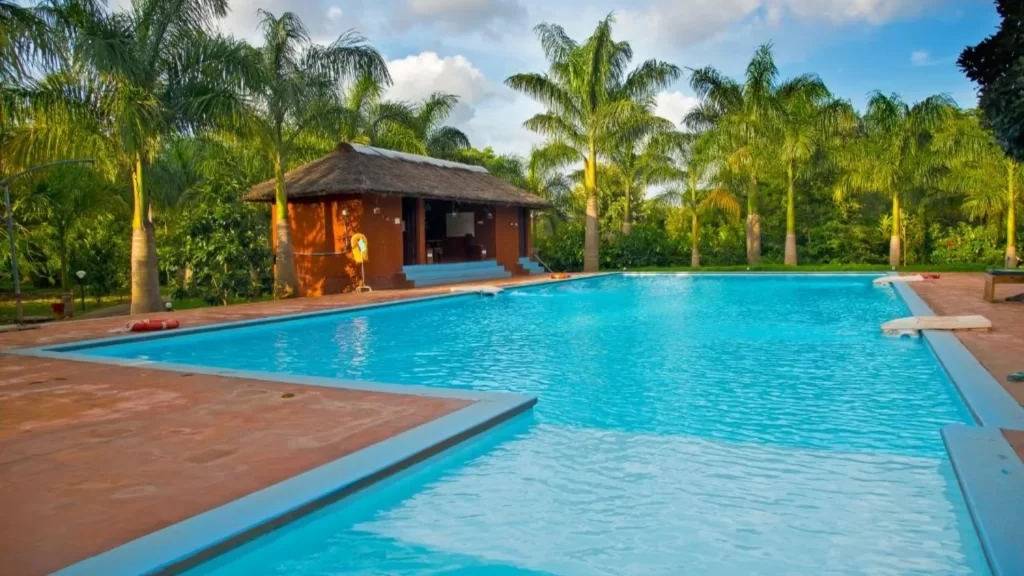
At Red Earth Tadoba, the experience moves to the edge of Tadoba Andhari Tiger Reserve in Maharashtra. The resort is set across 15 acres of forest cover, with a tributary of the Andhari River running through it, and cottages planned around existing vegetation to blend into the surrounding wilderness. The emphasis is not polished sameness but a sense of belonging to the landscape.
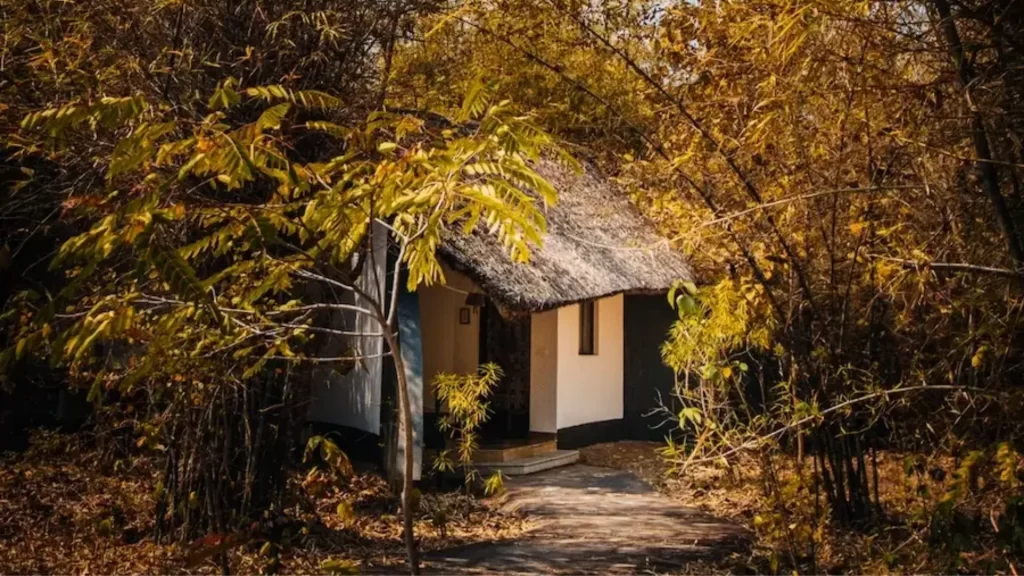
Together, Oberoi and Red Earth represent two important strands of India’s evolving wilderness hospitality. One brings the precision and polish of a luxury hotel group to tiger country. The other grows from a more rooted, community and ecology-led spirit of place. Both, in different ways, recognise that the future of safari travel must move beyond the thrill of the sighting.
Because the sighting, memorable though it may be, is only one part of the story.
The real story is the forest. The water systems. The guides. The communities. The grasses. The alarm calls. The birds most people forget to notice. The fragile choreography that allows a landscape to remain alive.
Luxury in the wild, when done well, should leave no doubt about who is in charge.
And it is not us.