
The design philosophy behind Evolve Back Resorts
Luxury hotels often begin with a blueprint. A brand defines its aesthetic, architects draft a structure, and a destination is selected to host the finished creation. Yet some hospitality projects emerge through a different process altogether, one that begins not with architecture but with landscape.
This is the approach that defines Evolve Back Resorts, a collection of properties in India where architecture is conceived not as an imposition on the land but as an interpretation of it. Each resort reflects the cultural and ecological character of its surroundings, translating local history, craft traditions and vernacular building practices into contemporary hospitality design.
The result is a portfolio that reads less like a series of hotels and more like an architectural conversation between past and present.
Kabini: The Logic of the Jungle
At Evolve Back Kabini, set along the Kabini River on the edge of Nagarhole National Park, architecture follows the quiet logic of the forest.
Rather than constructing a monumental resort that would dominate the environment, the designers chose a vocabulary inspired by the traditional hunter lodges and forest bungalows once used by naturalists and explorers in the region. The built forms are low-slung, deliberately restrained, and dispersed across the landscape to minimise visual intrusion.
The materials themselves are drawn from local traditions. Timber structures, clay roof tiles and textured plaster surfaces echo the architecture of colonial forest lodges while remaining unmistakably contemporary in execution. Large verandas and open pavilions create transitional spaces between indoors and outdoors, allowing the forest to remain an ever-present companion.
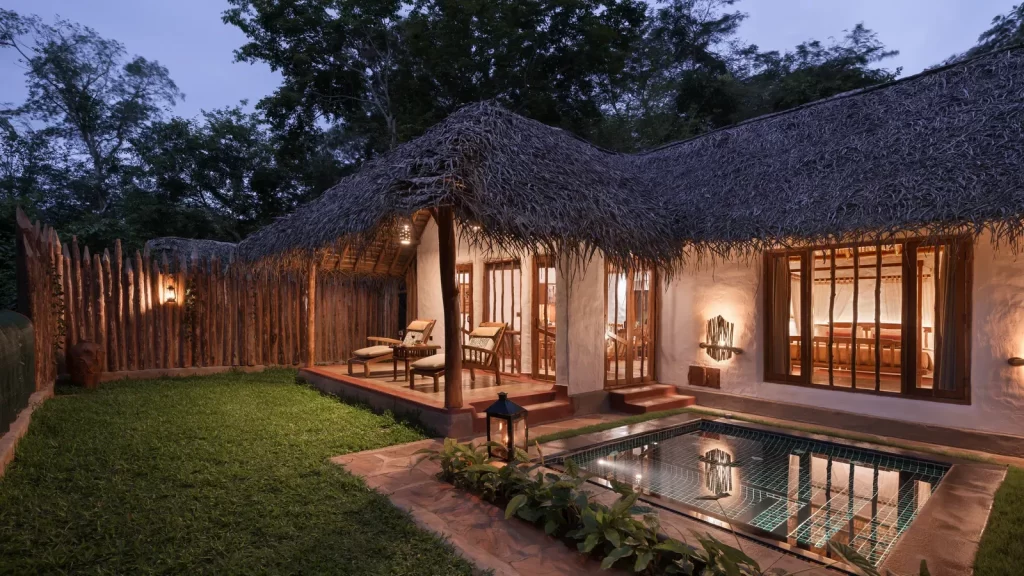
Technically, the architecture employs passive design strategies well suited to tropical climates. High ceilings encourage natural ventilation, deep overhangs shield interiors from harsh sunlight, and large openings frame views of the surrounding forest without requiring extensive mechanical cooling.
The design does not seek attention. Instead, it cultivates atmosphere.
Coorg: Reimagining the Kodava Ancestral Home
Further south in the Western Ghats lies Evolve Back Coorg, where architecture draws inspiration from the traditional Kodava ainmane, the ancestral homes of the Kodava community.
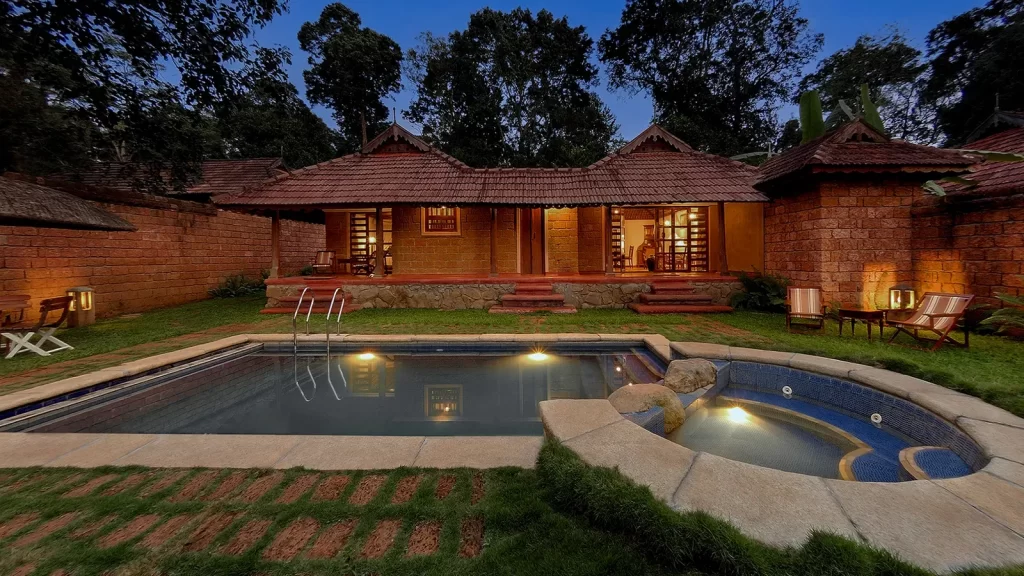
These historic residences were designed as large, inward-looking compounds that accommodated extended families while responding to the region’s heavy monsoon climate. Thick laterite walls, sloping tiled roofs and deep verandas allowed the buildings to endure both rain and time.
Evolve Back Coorg reinterprets this vernacular form at a resort scale. Villas are organised around private courtyards, echoing the spatial hierarchy of traditional homes. Interiors employ rich wooden detailing, carved pillars and antique furniture sourced from the region, creating an environment that feels culturally grounded rather than stylistically generic.
The landscape design is equally intentional. Coffee plantations surround the resort, reinforcing the sense that guests are living within an estate rather than visiting a hotel.
From an architectural perspective, the project demonstrates how vernacular typologies can be translated into modern hospitality without sacrificing authenticity.
Hampi: Reconstructing a Lost Empire
If Coorg represents a dialogue with domestic architecture, Evolve Back Hampi engages with something far grander: the legacy of the Vijayanagara Empire, whose capital once stood nearby.
The ruins of Hampi are among India’s most extraordinary archaeological landscapes, defined by monumental temples, stone mandapas and intricately carved pillars. Rather than mimic these structures superficially, the architects sought to interpret the spatial principles of Vijayanagara architecture.
Guests enter the resort through imposing gateways that echo the gopuram-style entrances of temple complexes. Pathways unfold through a sequence of courtyards and pavilions, creating an architectural rhythm reminiscent of historic palace compounds.
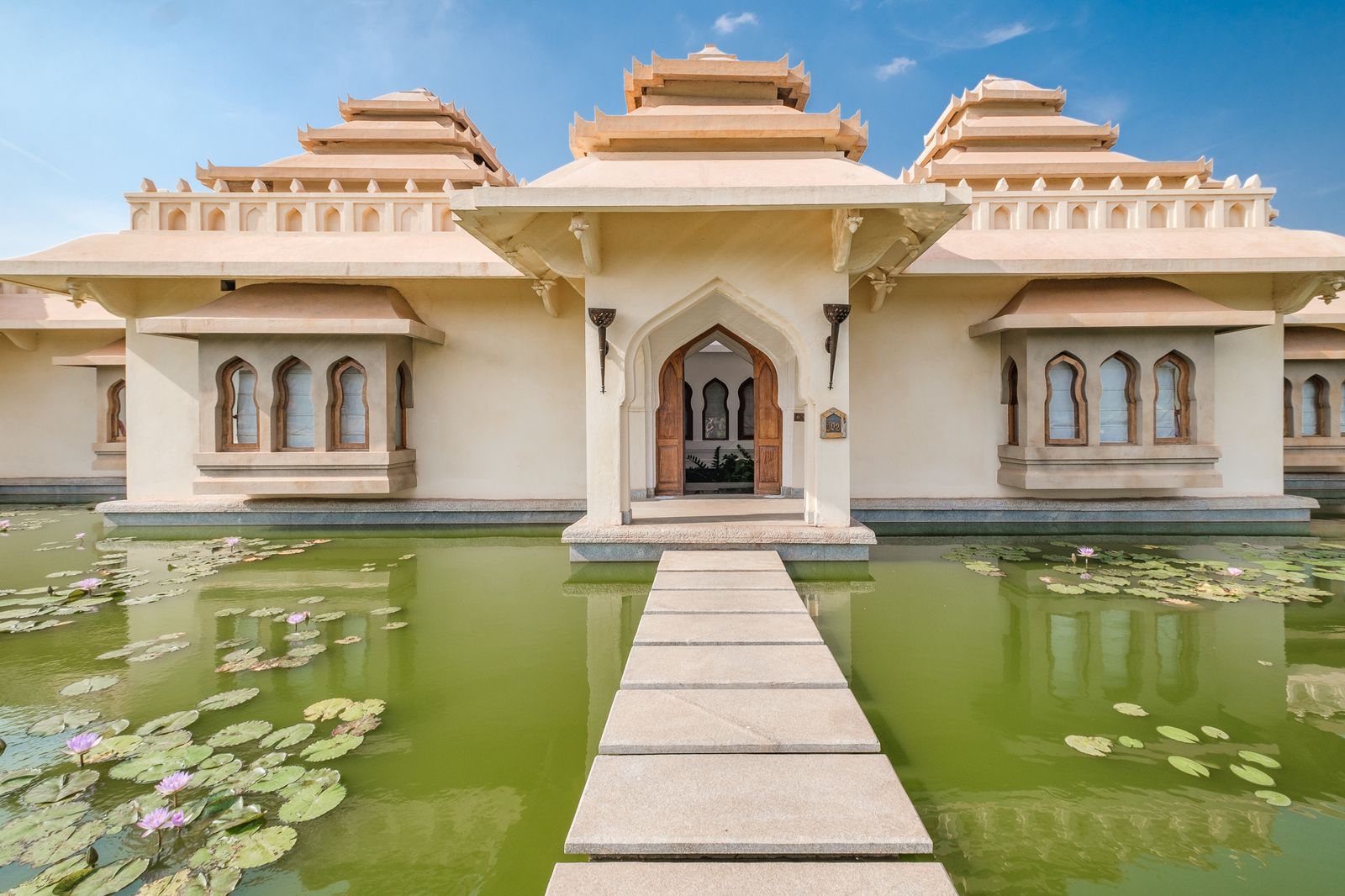
Materials play a crucial role in establishing authenticity. Granite, the stone that dominates Hampi’s landscape, appears throughout the property in columns, plinths and sculptural elements. Ornamental detailing references the carvings of Vijayanagara artisans while avoiding pastiche.
The result is an environment that evokes the grandeur of an empire without attempting literal reconstruction.
Technically, the design demonstrates how historic architectural motifs can be adapted for contemporary hospitality infrastructure. Large courtyards promote airflow, shaded corridors protect interiors from intense sunlight, and water features contribute both aesthetic and climatic value.
Architecture as Narrative
What unites the resorts of Evolve Back is the belief that architecture should tell a story about its location.
Each property begins with extensive research into local history, building traditions and landscape patterns. Architects collaborate with historians, artisans and craftsmen to ensure that design decisions remain rooted in cultural context.
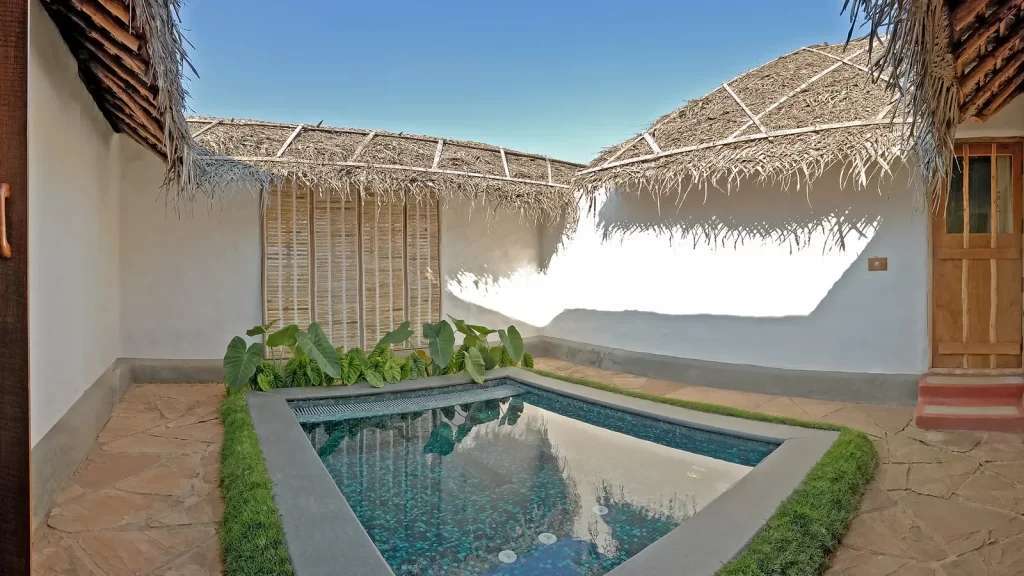
This approach requires patience. Authentic materials must be sourced, traditional techniques revived, and modern engineering solutions integrated discreetly into heritage-inspired forms.
The process is complex, but the outcome is architecture that feels genuine rather than decorative.
The Landscape as the True Architect
Perhaps the most striking aspect of Evolve Back’s design philosophy is its refusal to compete with the environment.
In Kabini, the forest defines the scale and texture of the architecture. In Coorg, coffee plantations shape the spatial experience. In Hampi, the surrounding ruins influence the geometry and monumentality of the built form.
The hotels do not attempt to dominate these landscapes. Instead, they mirror them.
For travellers, this creates a subtle but powerful effect. The architecture becomes a lens through which the destination itself can be understood.
A Different Kind of Luxury
In an era when luxury hospitality often gravitates toward spectacle, Evolve Back Resorts offers an alternative proposition: architecture that belongs to its landscape.
By drawing from vernacular traditions, employing regionally appropriate materials and respecting environmental context, the resorts demonstrate that thoughtful design can enrich travel experiences without overwhelming them.
For the intellectually curious traveller, this approach transforms a hotel stay into something more meaningful. One inhabits a story written in stone, timber and landscape.