
Four cities, one unforgettable journey
There are places you travel to, and there are places that stay with you. Rajasthan belongs firmly to the second kind.
The Land of Kings has a way of making history feel almost tangible. Fortresses rise dramatically above ancient cities. Palace walls glow with intricate paintings and mirrored mosaics. Narrow lanes lead to bustling bazaars filled with spices, textiles and jewellery, while beyond the cities, the vast Thar Desert stretches towards the horizon.
And although it’s easy to get caught up in a long list of sights to see, Rajasthan is best experienced slowly, allowing the journey between its cities to become part of the experience. The long road between destinations brings its own discoveries: a village appearing beyond the window, a roadside tea stall, changing landscapes and small moments of everyday life.
For travellers arriving from the UK and Europe, Delhi makes a convenient gateway to Rajasthan. From here, a short flight takes you to Jaipur, where a journey through four of the state’s most evocative cities can begin.
Jaipur: Where every street tells a story
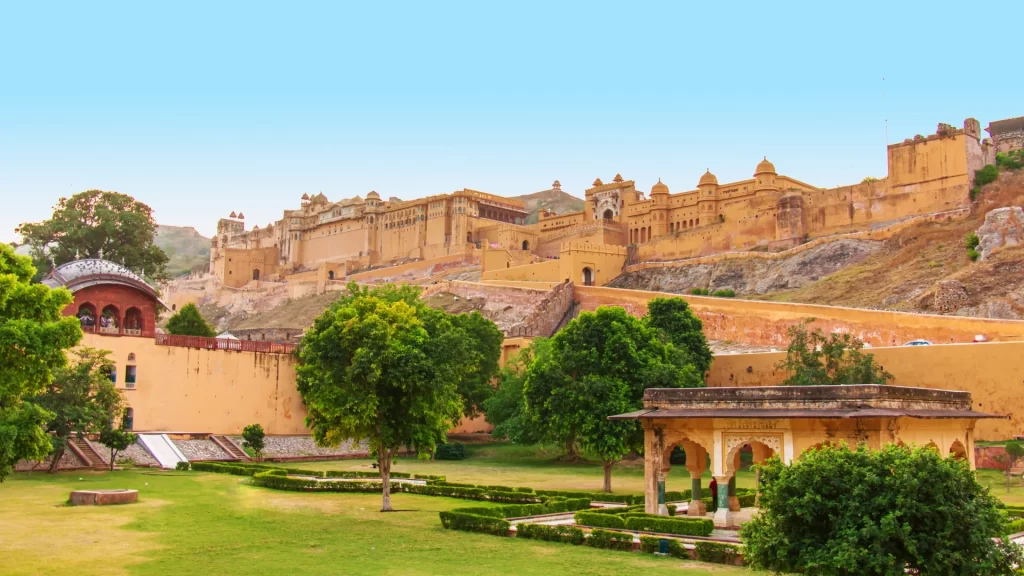
Jaipur, the Pink City, is an easy place to fall in love with. Its terracotta-coloured streets wind past jewellers, textile shops, flower sellers and centuries-old buildings, creating a city that feels both wonderfully alive and steeped in history. The magnificent Hawa Mahal, or Palace of Winds, with its delicate façade punctuated by 953 windows, is one of the city’s most recognisable sights. At the City Palace, still home to Jaipur’s royal family, ornate courtyards, textiles, paintings and architecture offer a sense of stepping back into the lives of the city’s former rulers.
Beyond the grand monuments, Jaipur opens the door to another world through its bustling markets, where embroidered textiles, jewellery and traditional crafts fill the colourful stalls. An onion kachori becomes an excuse to linger, while a beautifully crafted treasure, perhaps a piece of jewellery, a length of gota-work or Bandhani fabric, or a quilted handbag, can become a little piece of Rajasthan to carry home and cherish long after the journey has ended.
Sariska: A quieter side of Rajasthan
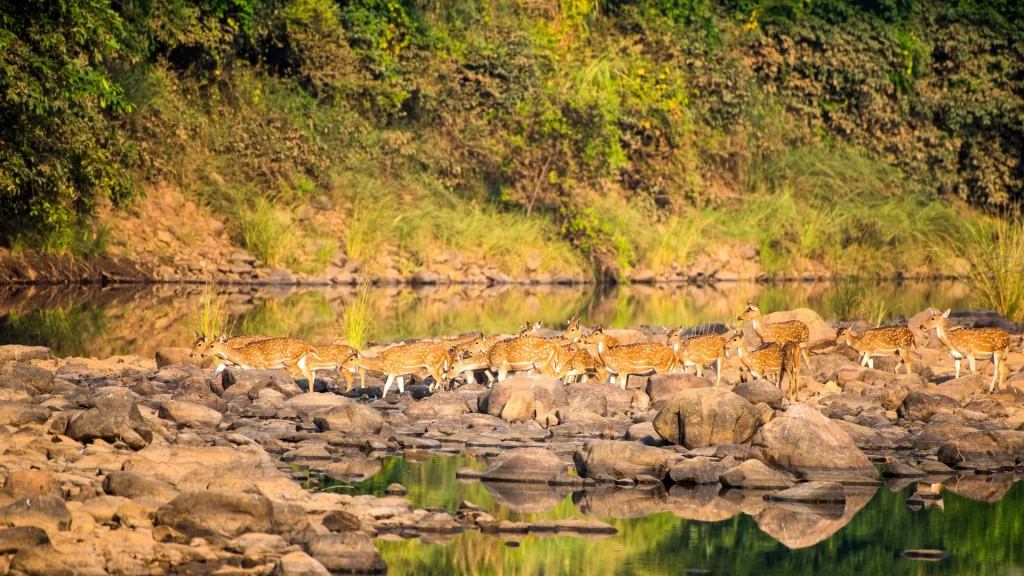
For those who want to experience Rajasthan beyond its cities and palaces, Sariska offers a gentle change of pace. Around two hours from Jaipur, the Sariska Tiger Reserve lies amid the rugged Aravalli Hills, where dry deciduous forests, open grasslands, rocky landscapes and ancient cliffs create a striking natural setting. The reserve is best known for its tiger population, but sambar, chital, wild boar, nilgai, jungle cats and rhesus macaques also inhabit the forest, while the skies are home to an impressive variety of birds, including crested serpent eagles and sandgrouse.
Early morning and late afternoon safaris offer a chance to experience the forest at its most atmospheric, as sunlight filters through the trees and wildlife gradually emerges. For a journey through Rajasthan, Sariska provides a welcome contrast to the grandeur of Jaipur: a chance to step away from the bustle, spend time in nature and discover a quieter side of the state, where the landscape itself becomes part of the story.
Jodhpur: A city painted in blue
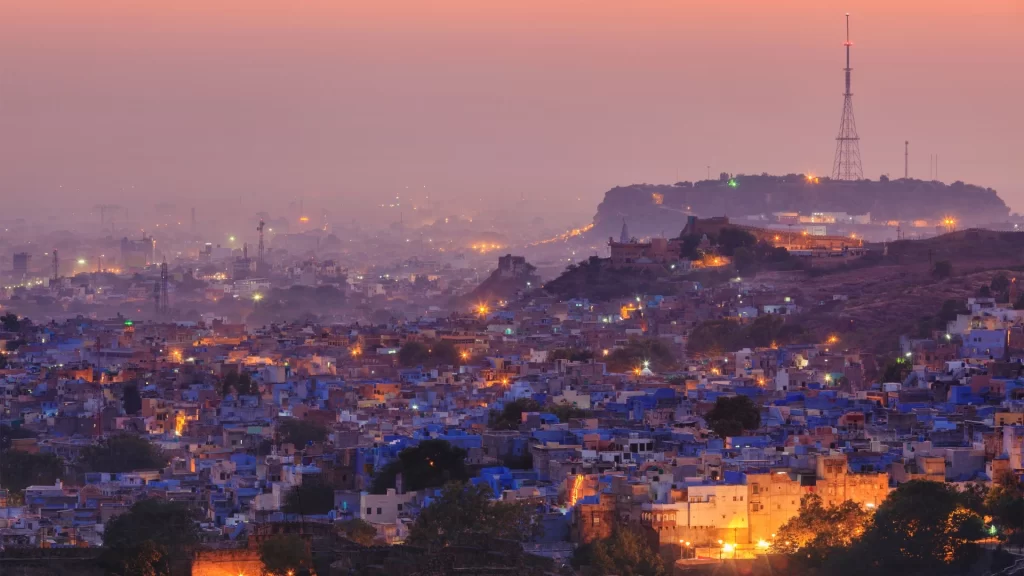
Around six hours by road from Jaipur, Jodhpur feels like a dreamy stroll through the past. The city’s blue-painted houses gather beneath the imposing Mehrangarh Fort, one of India’s great historic fortresses. Rising high above the old city, the fort offers spectacular views across the blue rooftops and towards the landscapes of the Thar. Inside, its courtyards, galleries and richly decorated rooms reveal the grandeur of the Rathore rulers who once lived here.
Yet Jodhpur is just as compelling at street level. Narrow lanes open into colourful markets, where spice merchants sit surrounded by fragrant mounds of turmeric and chilli, and shops are filled with bright textiles and traditional crafts. The colours seem to intensify in the desert light: indigo, saffron, crimson and gold. There is something wonderfully unhurried about watching everyday life unfold beneath centuries-old walls, with the sounds and scents of the old city revealing a world that feels both timeless and very much alive.
Udaipur: Where Rajasthan meets the water
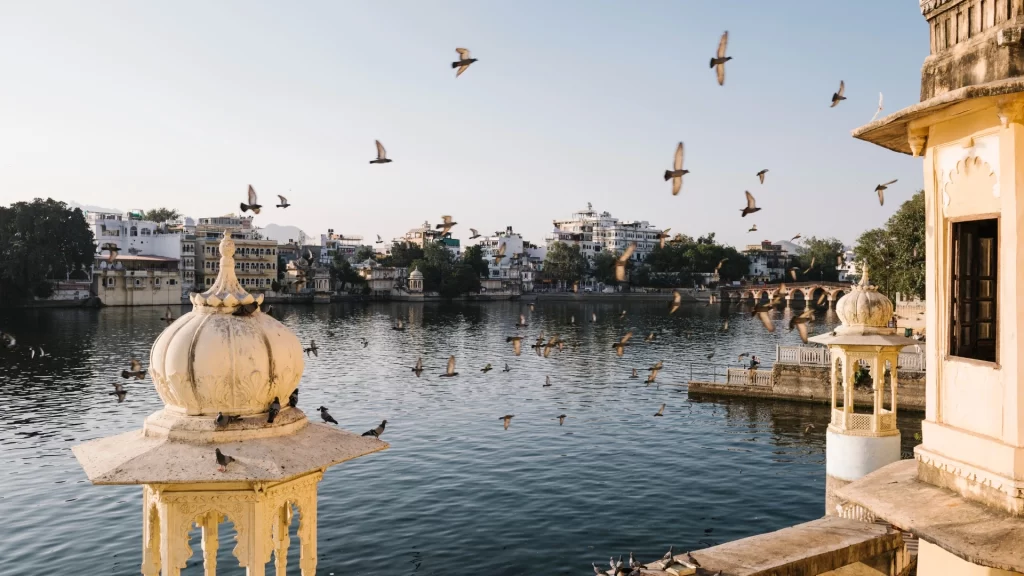
Around five hours from Jodhpur by road, Udaipur offers a softer, shimmering side of Rajasthan. Known as the City of Lakes, it is built around the waters of Lake Pichola, with the Aravalli hills forming a dramatic backdrop. White marble palaces appear to rise from the water, their façades catching the changing light throughout the day. Towards evening, they take on the warm colours of the setting sun, while the surrounding hills become silhouettes against the fading light.
For another perspective on the state’s living heritage, Shilpgram, a rural arts and crafts complex, brings together traditional architecture, music, dance, handicrafts and food. It offers a window into the communities and artistic traditions that continue to shape the region’s cultural identity.
Here, the pace naturally slows.
On the map, Jaipur, Sariska, Jodhpur and Udaipur are simply four cities connected by roads. But travelling between them reveals Rajasthan in layers. Sariska brings a welcome shift from Jaipur’s bustle to the quiet of the Aravalli Hills and its wild landscapes. The pink of Jaipur gives way to the blue of Jodhpur. The desert landscapes gradually change as the road moves towards the lakes of Udaipur. Along the way come glimpses of villages, roadside temples, fields, old havelis and everyday scenes that rarely make it onto a sightseeing list.
The journey home can be just as seamless. From Udaipur, direct flights to Delhi provide an easy connection for the journey home, allowing the journey through Rajasthan to end without retracing its steps.
By the end, what remains are fragments: the glow of a palace reflected in a lake, the sound of bells at dusk, the scent of spices drifting through markets, pink walls catching the late afternoon sun, and a winding road disappearing into the Rajasthan landscape.