
Palaces, villages, havelis, desert houses and the pleasures of looking past the postcard
Rajasthan suffers from a problem most destinations would envy. Its icons are almost too successful.
Mention the state and the mind fills immediately with forts, turbans, camels, mirror work, lake palaces and a sunset so obliging it appears to have been briefed by the tourism board. None of this is untrue. It is simply incomplete.
The deeper Rajasthan begins when the traveller stays longer.
It is found in family homes, countryside estates, old havelis, desert villages, wildlife camps and small towns where the past is not performed but absorbed into daily life. Here, hospitality is not merely a service language. It is an inheritance.
The Ajit Group, with Ajit Bhawan and Rawla Narlai, offers two compelling expressions of this inheritance. Ajit Bhawan in Jodhpur carries the aura of an old royal home, while Rawla Narlai is known for experiences that connect guests with the village landscape around it. Its celebrated stepwell dinner, set around an ancient stepwell with music, lighting and a curated meal, is precisely the sort of Rajasthan moment that sounds implausibly cinematic until it actually happens.
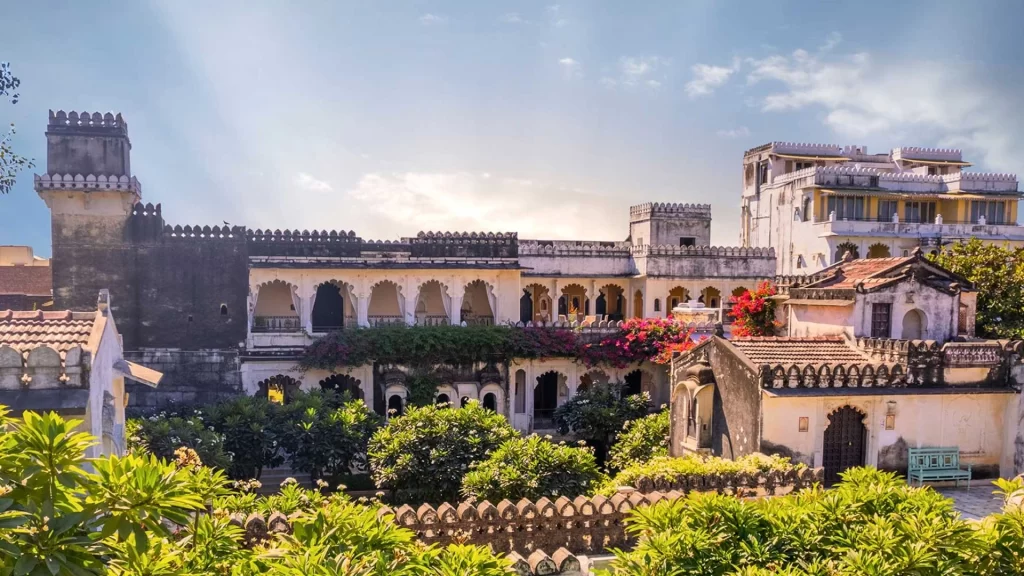
At Shahpura Bagh, the pace changes again. Set between two lakes across a 45-acre estate, this family-owned retreat has just nine suites and access to Dhikola Fort, a private 450-year-old fort owned by the family. Built in the late nineteenth century, the estate blends Rajput and European architectural influences with original features such as chandeliers, gothic windows and arched arcades. It is heritage without the elbowing crowds, which is often the best kind.
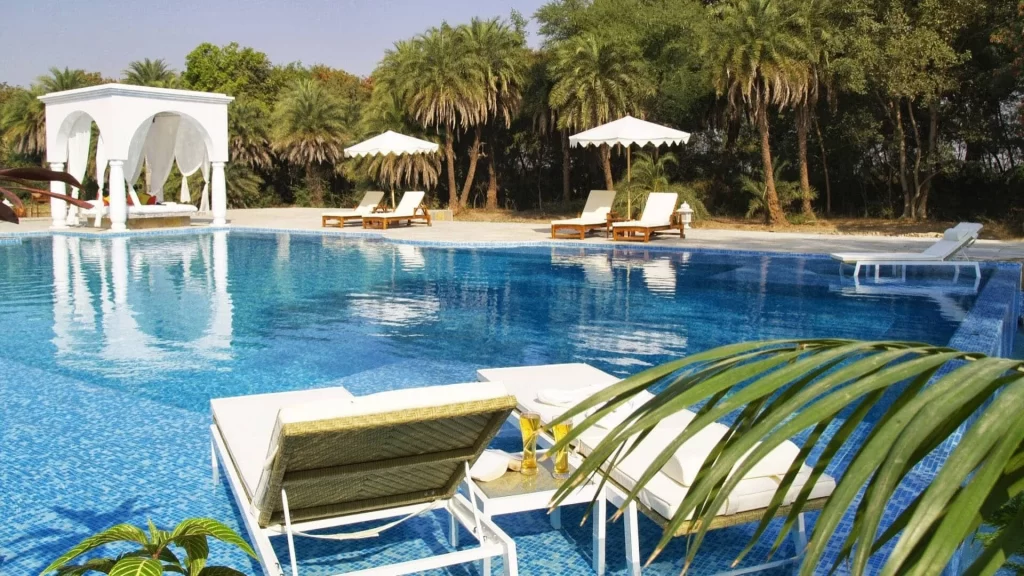
The wild side of Rajasthan appears at Utsav Camp Sariska, located near the Sariska Tiger Reserve amid the Aravalli hills. Its forest villas are designed to immerse guests in nature while offering comfort and access to wildlife experiences. Sariska’s landscape, with its boulders, dry deciduous forest and elusive wildlife, is a reminder that Rajasthan is not only desert romance. It is also leopard country, vulture country, hyena country and, for those paying attention, a fine place to relearn humility.
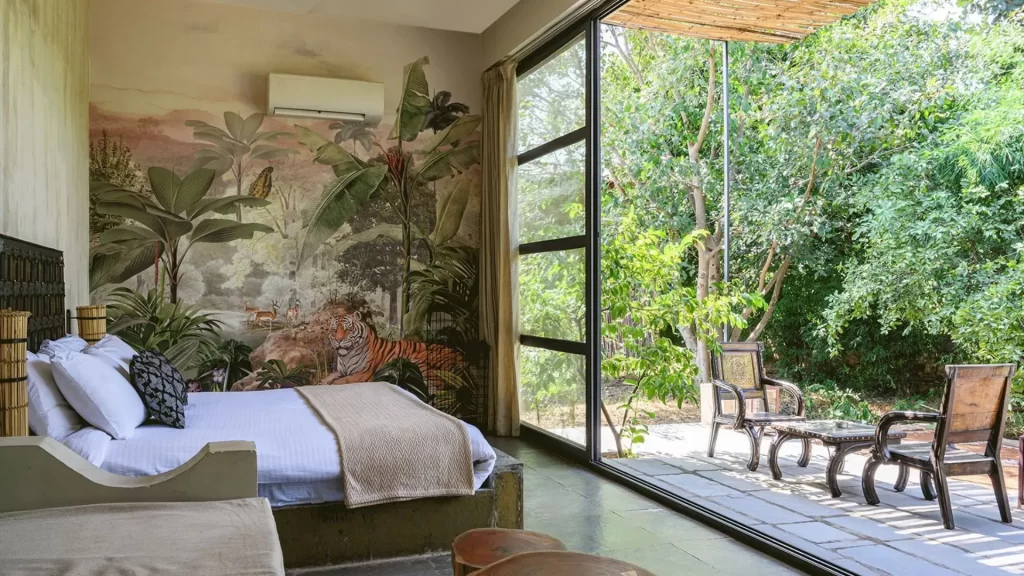
House of Rohet opens another chapter. Rohet Garh, the ancestral seat of the family since 1622, and The Rohet House in Jodhpur speak to a refined but intimate style of hospitality. Their world includes equestrian traditions, rural excursions, desert culture and a sense of continuity that no amount of marble can manufacture. House of Rohet shows Rajasthan not only as spectacle, but as lived landscape.
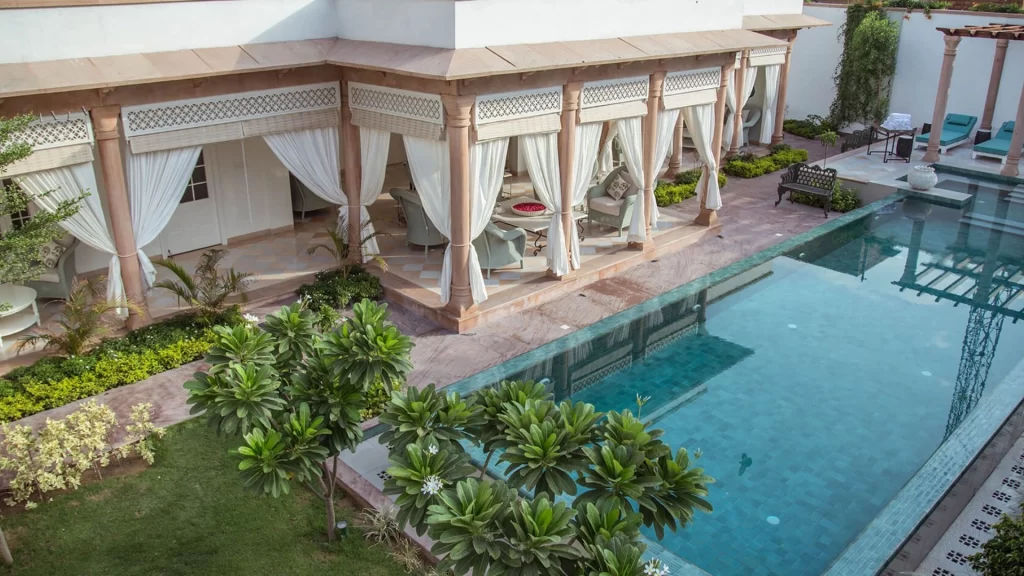
In Udaipur, Chunda Palace embraces grandeur more openly, and rather well. Inspired by authentic palace design, with Rajasthani handicraft, traditional architecture and proximity to Lake Pichola, it offers the city in its most painterly mood. If Udaipur is theatre, Chunda knows exactly when to raise the curtain.
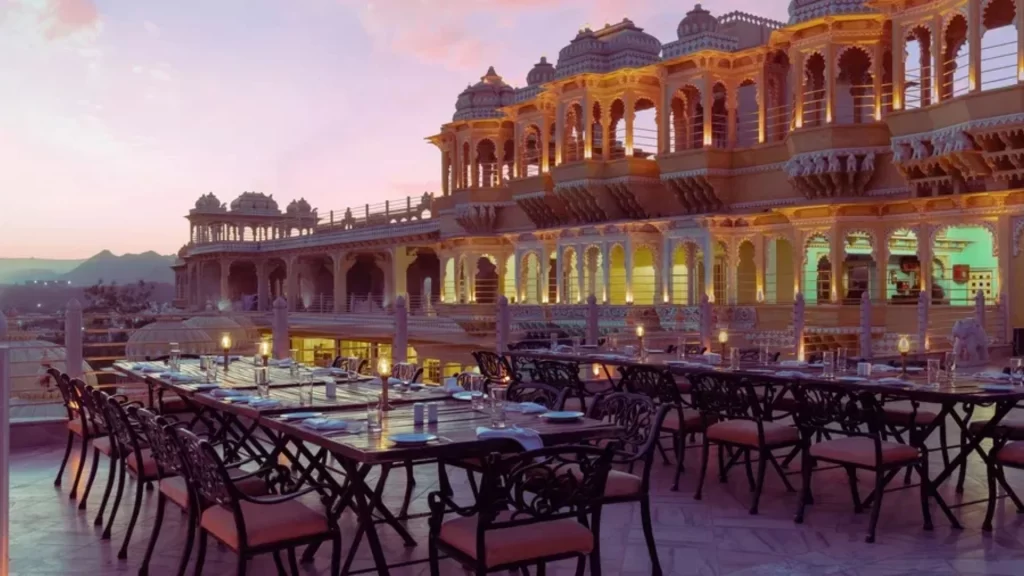
Dev Shree, Deogarh offers a gentler register. A restored royal home in a quiet Rajasthani town, it brings together tradition, modern comfort and the calm of Deogarh’s countryside. Here, the drama lies not in scale but in mood: birdsong, lake views, local life and hospitality that feels personal rather than choreographed.
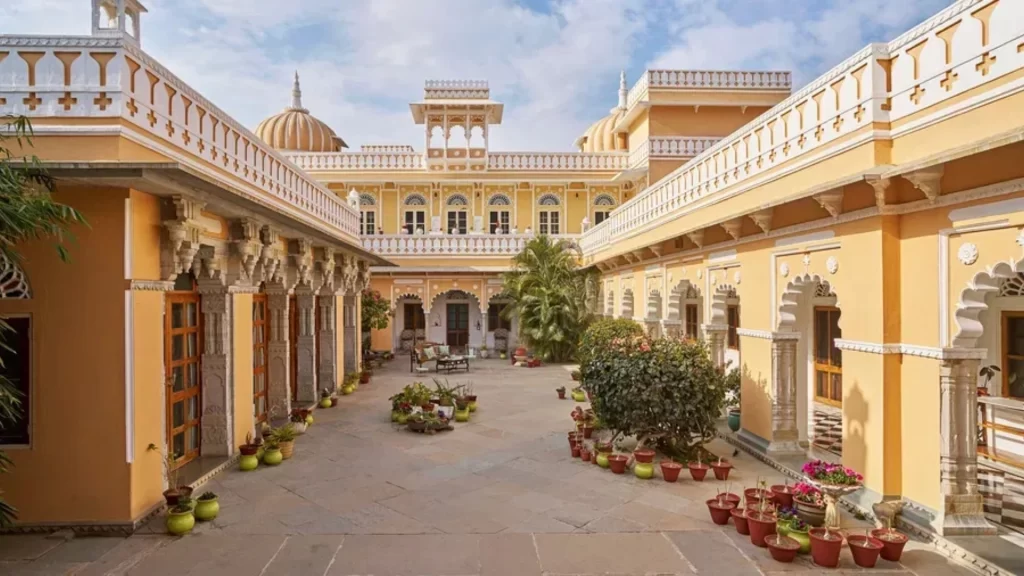
The story then extends beyond Rajasthan to Delhi through Haveli Dharampura and Golden Haveli. Haveli Dharampura offers a restored gateway into Old Delhi, while Golden Haveli, described by the hotel as a nearby addition to the Old Delhi experience, deepens the sense of heritage continuity. Together, they remind us that the haveli is not just a building type. It is a way of entering memory.
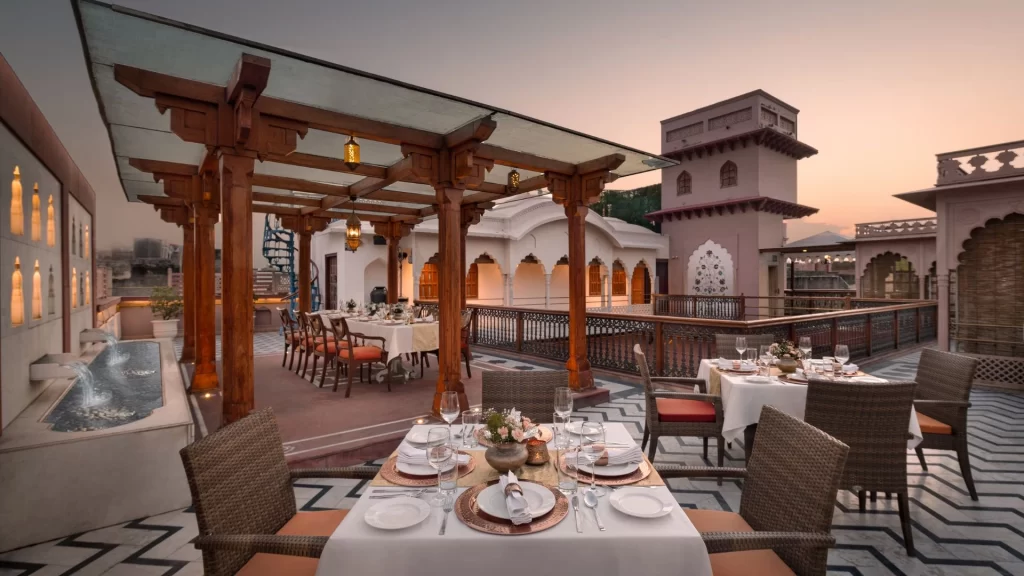
Rajasthan beyond the obvious is still romantic. It simply becomes more interesting. Less postcard, more paragraph. Less spectacle, more soul.
And infinitely better for staying a little longer.