
How India’s Most Thoughtful Safari Lodges Are Quietly Rebuilding Forests
Rewilding has become one of those wonderfully fashionable words frequently deployed at sustainability conferences by people wearing linen jackets and speaking earnestly about ecosystems over sparkling water.
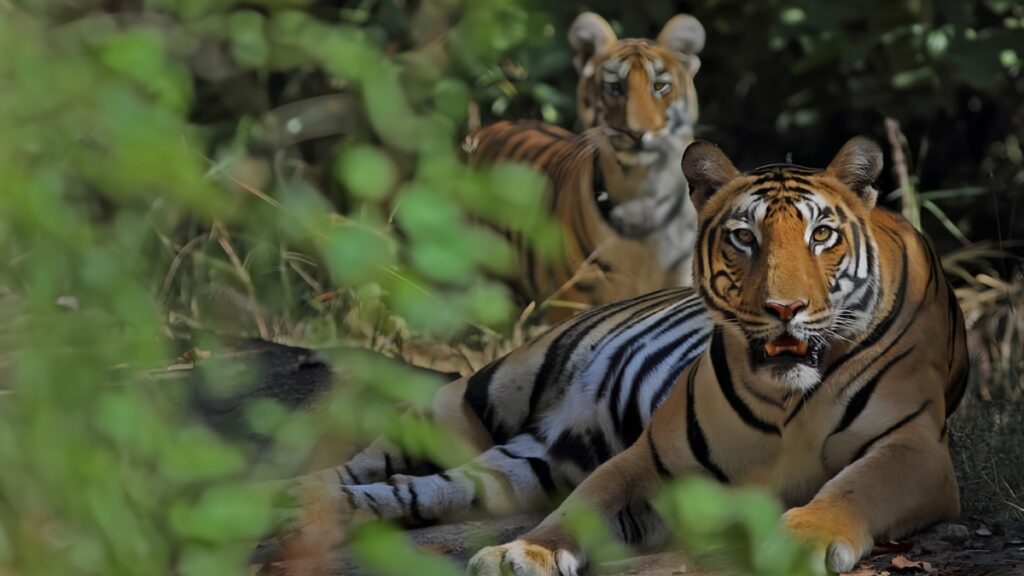
One hears it often, usually alongside phrases such as “nature-positive futures” and “regenerative landscapes”. Occasionally, however, one encounters places genuinely doing the work. Not performatively. Not for brochure aesthetics. But slowly, patiently and with ecological seriousness.
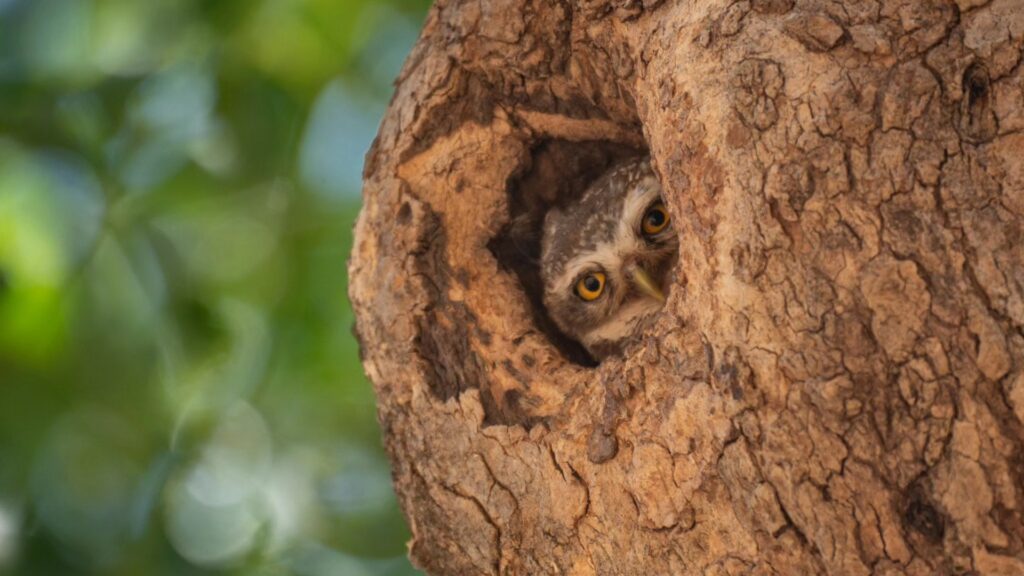
Across Central India, a handful of safari lodges are demonstrating that hospitality can contribute meaningfully to landscape restoration. Not through grand declarations, but through something rather more useful: long-term ecological stewardship.
Three lodges in particular stand out.
Flame of the Forest Safari Lodge in Kanha.
Reni Pani Jungle Lodge near Satpura.
Bori Safari Lodge at the edge of the Bori Wildlife Sanctuary.
Each approaches wilderness differently, yet all share an increasingly important philosophy. The forest is not merely scenery. It is responsibility.
Flame of the Forest, Kanha
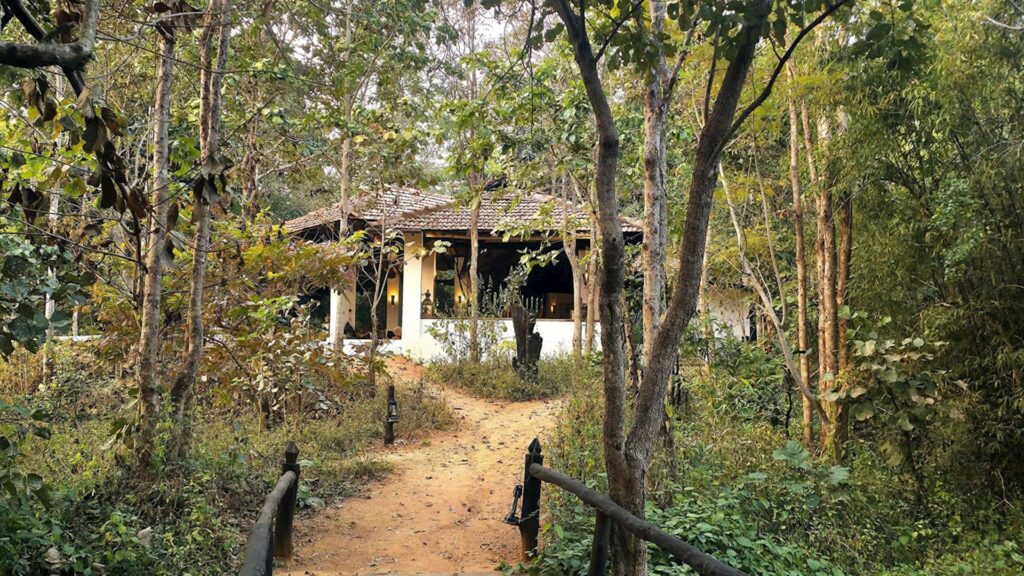
At Flame of the Forest in Kanha, the emphasis has always been intimacy with landscape rather than luxury in excess. Set near one of India’s most celebrated tiger reserves, the lodge operates almost as an extension of the forest itself.
The architecture remains intentionally unobtrusive. Cottages emerge gently from vegetation rather than interrupting it. Native planting dominates the landscape. Artificial illumination is minimal, allowing nocturnal rhythms to continue with relative normalcy. Importantly, the surrounding land has not been manicured into ornamental hospitality gardens. It has been allowed to return.
Birdlife flourishes in these recovering habitats. Insects, pollinators and smaller mammals reappear gradually when land is left ecologically functional rather than aggressively aestheticised. This may sound terribly obvious. And yet much of modern hospitality still behaves as though biodiversity were somehow incompatible with comfort.
Reni Pani Jungle Lodge in Satpura, takes this philosophy even further.

Spread across 30 acres bordering Satpura Tiger Reserve, the lodge has consciously restored native vegetation across the property, creating habitat continuity for wildlife moving through the buffer forests. Leopards, civets, jackals, porcupines and extraordinary birdlife now utilise areas that might otherwise have become sterile hospitality landscapes. The effect is subtle but significant. Guests often speak about feeling immersed within wilderness rather than merely adjacent to it. That distinction matters.
Let’s move on to the Bori National Park
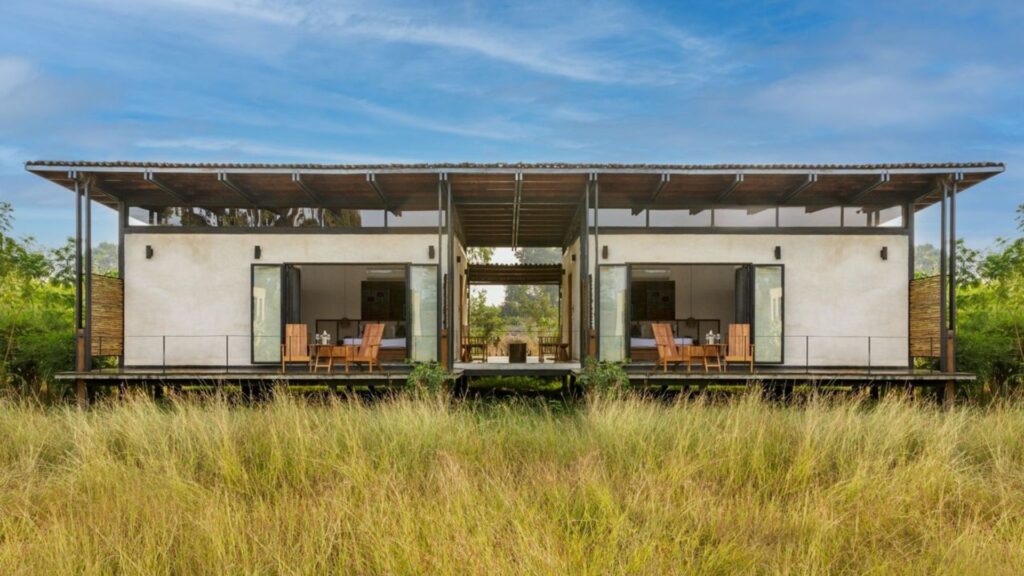
At Bori Safari Lodge, meanwhile, the relationship between lodge and landscape feels deeply interconnected. Located near the lesser-visited Bori Wildlife Sanctuary, part of the Satpura landscape, the lodge exists within one of India’s oldest forest systems.
There is a certain humility to the experience here. The forests are dense, ancient and occasionally inscrutable. Safaris do not promise theatrical sightings every six minutes. Nature continues largely on its own terms.
Which, frankly, is how forests ought to behave. Yet perhaps the most interesting aspect of these lodges lies beyond guest experience altogether.
Unwittingly, and perhaps increasingly intentionally, they are creating carbon sinks. By protecting native forests, restoring degraded land and allowing biodiversity to regenerate, such landscapes naturally absorb and store atmospheric carbon. Mature forests function as extraordinary carbon reservoirs, locking away emissions over long periods while simultaneously sustaining water cycles, soil health and wildlife populations.
The implications are fascinating. As global conversations around carbon credits and nature-based climate solutions accelerate, responsibly managed conservation landscapes may become economically valuable not merely for tourism, but for their measurable ecological services.
This opens a delicate but important conversation. Can tourism help finance biodiversity protection without commodifying nature itself? Possibly. Provided the ecological integrity remains genuine.
What makes these lodges compelling is that the conservation ethic appears embedded rather than retrofitted. Sustainability here does not feel like an anxious marketing department’s afterthought. It shapes operational decisions, architectural restraint, water usage, local employment, waste management and landscape restoration. Guests sense this instinctively. One notices fewer unnecessary interventions.
Fewer ornamental excesses. Less ecological vanity.
Instead, there is immersion.
Meals shaped by local produce. Naturalists deeply connected to landscape. Open spaces where silence still exists. And increasingly, travellers are responding to precisely this. Because luxury itself appears to be evolving. The old model celebrated abundance. The new one increasingly values integrity.
The privilege today is not simply staying somewhere beautiful. It is knowing the existence of that stay may actively support the future of the landscape surrounding it.
Of course, tourism alone cannot save India’s forests. That responsibility belongs equally to policy, governance and larger systems. But these lodges demonstrate something important.
Hospitality need not merely consume nature. It can participate in restoring it.
And in an era of ecological anxiety, that may well become one of travel’s most meaningful contributions. Quite remarkable, really. A safari lodge quietly helping rebuild forests while guests sip evening gin and tonics beneath sal trees. One suspects the forests rather approve.