
Palace on Wheels
It is tempting, when speaking of train journeys in India, to reach for cinematic reference. And inevitably, one lands on The Darjeeling Limited — that peculiar, melancholic, slightly chaotic odyssey in which luggage is emotional, itineraries are optional, and self-discovery arrives with a degree of inconvenience.
The Palace on Wheels, mercifully, offers quite the opposite.
There is no frantic scrambling for carriages, no existential disputes over lost suitcases, and certainly no need to leap off a moving train in pursuit of personal closure. Instead, this is travel conducted with composure, where the journey is not a vehicle for unravelment, but a carefully orchestrated experience in refinement.
From the outset, the train establishes its tone. The carriages, inspired by the private saloons of erstwhile Maharajas, are richly appointed without tipping into excess. Polished wood, intricate textiles and attentive service create an atmosphere that is quietly assured rather than ostentatious. One is reminded less of cinematic chaos and more of a bygone era when travel was conducted with a certain dignity.
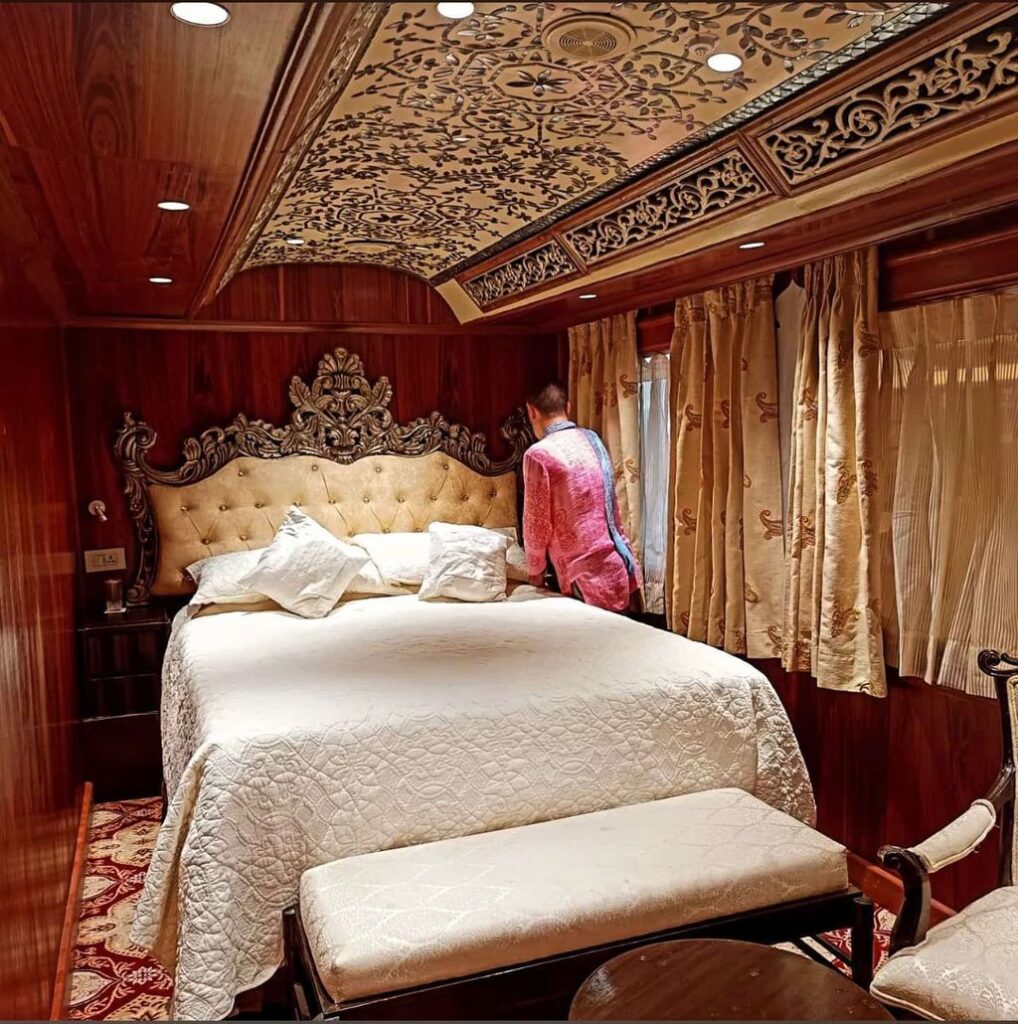
And yet, the true pleasure lies not in the interiors, but in the unfolding of the journey itself.
Rajasthan reveals itself through a sequence that feels almost literary. Forts rise abruptly from desert plains, cities shimmer with layers of history, and wildlife reserves offer fleeting encounters that feel all the more significant for their brevity. Each stop is curated with care, though never so rigidly as to feel theatrical.
There is, of course, a certain charm in observing the landscape from the comfort of one’s carriage. Unlike its cinematic counterpart, where characters peer anxiously through windows in search of meaning, here the act of looking is unburdened. One watches the Subcontinent pass by with a quiet sense of appreciation, rather than urgency.
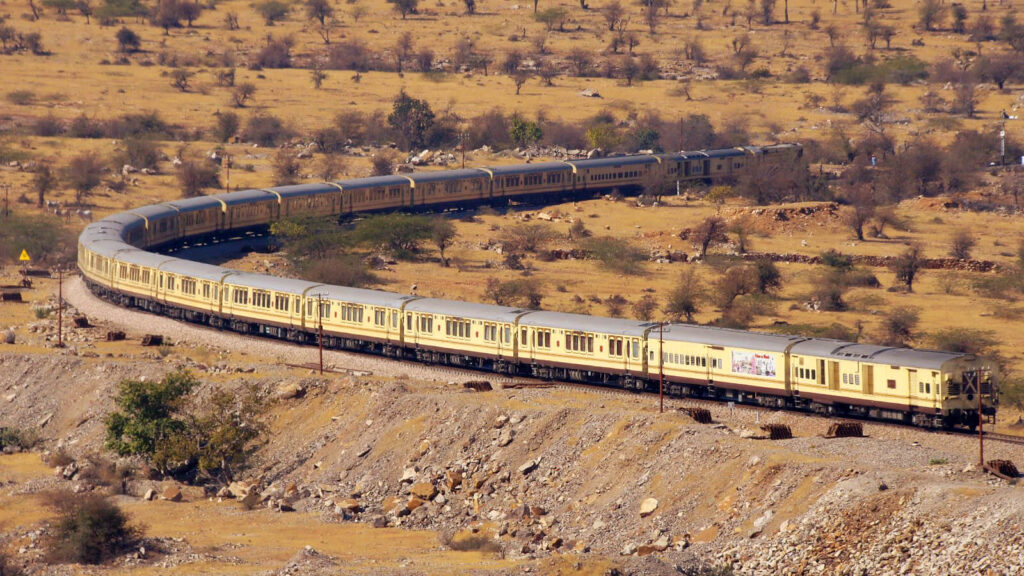
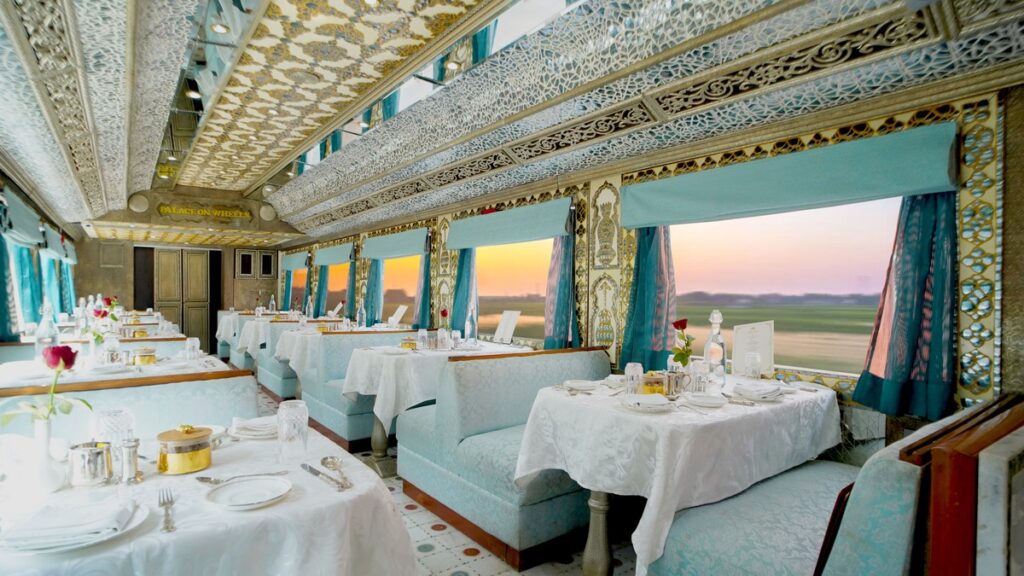
Meals are taken in elegant dining cars, where conversation flows easily and time seems to expand just enough to accommodate it. Evenings settle into a rhythm that feels unhurried, the train gently advancing through the night while the day’s impressions linger.
What the Palace on Wheels offers, ultimately, is a reconsideration of travel itself. It removes the friction, the haste, and the occasional absurdity that so often accompany movement, replacing them with a sense of continuity and ease.
In doing so, it achieves something rather rare.
A journey that is memorable not because it is chaotic, but because it is composed.