
There is a particular moment in India when the light changes. The air softens, mustard fields flare into improbable yellow, and the country begins to exhale after winter. In much of North India, shawls are folded away; in the south, harvests are gathered; in the hills, rhododendrons prepare their annual blaze.
Spring here is not announced quietly. It arrives with music, textiles, dance, and food. And across the country, communities mark the seasonal shift not only through ritual, but through festivals rooted in agriculture, craft and performance.
For travellers willing to look beyond the obvious, this is one of India’s most rewarding cultural windows.
Khajuraho Dance Festival, Madhya Pradesh
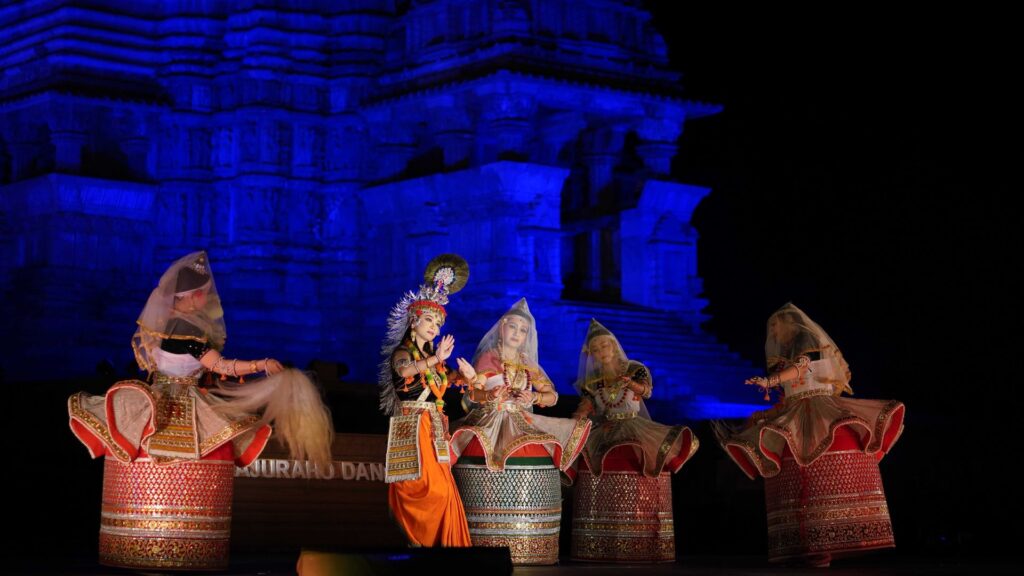
Set against the sculpted sandstone temples of Khajuraho, a UNESCO World Heritage Site, the Khajuraho Dance Festival unfolds each February as winter recedes. Established in 1975 by the Madhya Pradesh Kala Parishad, the festival was conceived to celebrate India’s classical dance traditions in a setting that honours their historical lineage.
Each evening, the temple complex becomes an open-air stage for Bharatanatyam, Kathak, Odissi, Kuchipudi and other classical forms. The choreography is exacting, the music live, the setting luminous under floodlit spires.
What distinguishes Khajuraho is its dialogue between architecture and performance. The temples themselves, built between the 9th and 12th centuries, depict dancers and musicians in carved relief. Watching contemporary performers animate that same vocabulary of movement, centuries later, is less spectacle than continuity.
For travellers, the festival offers a rare convergence of art, history and atmosphere, with the added advantage of pleasant temperatures before central India warms.
Baisakhi, Punjab
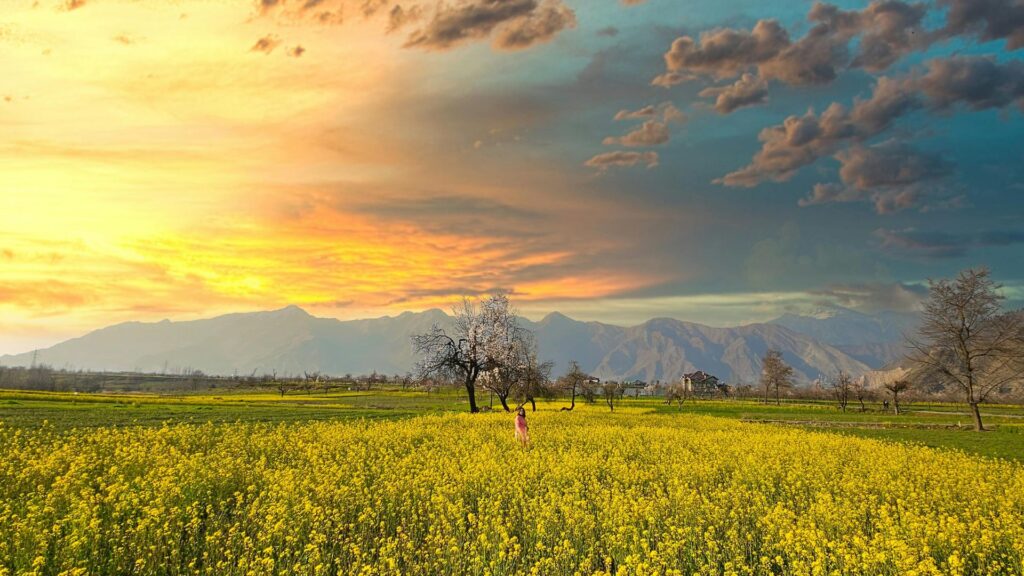
In Punjab, spring arrives with harvest. Baisakhi, celebrated each April, marks the agricultural new year and the ripening of wheat fields that stretch gold across the plains.
While the festival holds religious significance for many communities, its agricultural core remains unmistakable. Villages and towns host fairs, folk music gatherings and vigorous performances of bhangra and giddha, dances historically linked to the harvest season.
In rural Punjab, Baisakhi carries the unmistakable energy of gratitude for the land. Markets swell, drums reverberate, and fields ready for cutting become backdrops to celebration. For visitors, particularly those interested in agrarian culture, it is a moment to witness the mechanics of rural prosperity expressed through music and movement.
Bohag Bihu, Assam
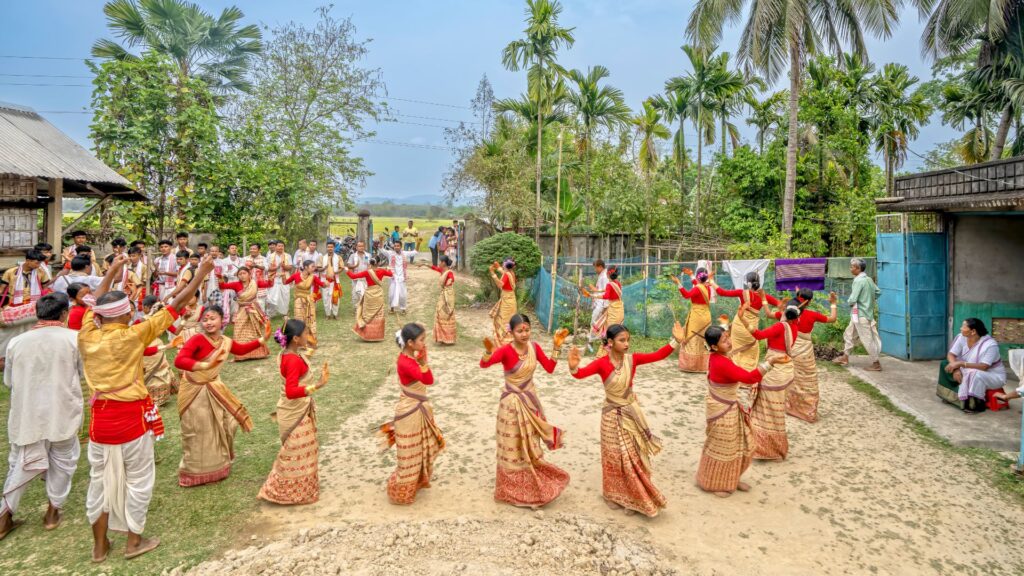
Further east, in Assam, Bohag Bihu marks the Assamese New Year and the onset of spring in mid-April. It is one of three Bihu festivals observed annually, but Bohag Bihu, also known as Rongali Bihu, is the most exuberant.
Rooted in the agricultural calendar, it celebrates sowing and fertility. Young men and women perform Bihu dances accompanied by dhol drums and pepa horns, while households prepare seasonal delicacies from rice and jaggery.
The countryside during Bohag Bihu is vivid with new growth. Bamboo groves and tea estates frame gatherings that feel both intimate and communal. Assam’s landscape, often overlooked in broader Indian itineraries, offers a softer, greener spring narrative.
Pohela Boishakh, West Bengal
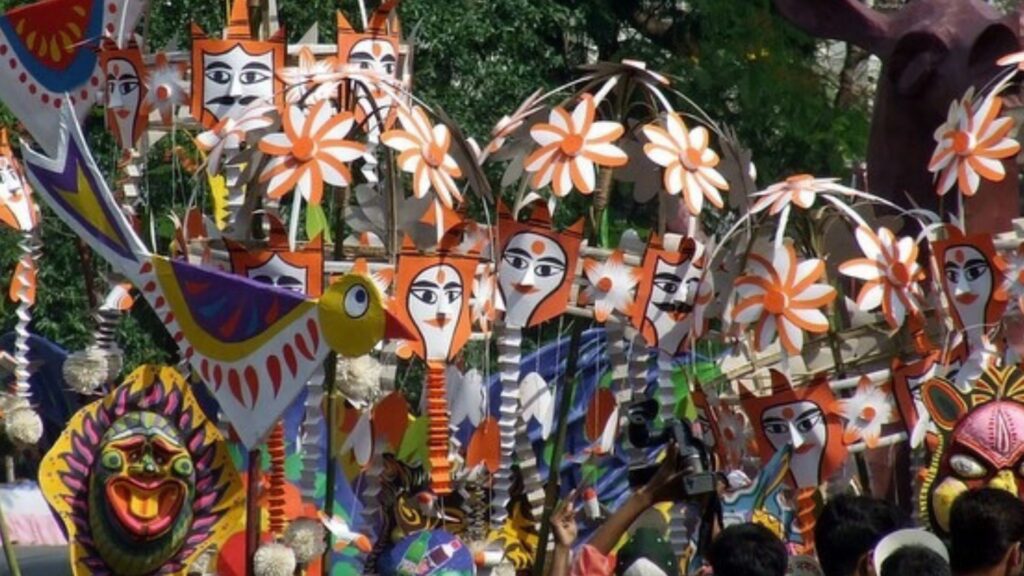
In West Bengal, Pohela Boishakh marks the Bengali New Year, typically on 14 or 15 April. Though observed across Bangladesh and eastern India, in Kolkata it unfolds as a cultural celebration of renewal.
Businesses traditionally open new account books, a symbolic gesture tied to the agricultural and commercial cycle. Streets fill with music, processions and food stalls offering seasonal sweets and savouries.
The mood is festive without frenzy. In the older quarters of Kolkata, art, literature and cuisine take centre stage. For travellers, Pohela Boishakh offers insight into Bengal’s distinctive cultural identity, where language, music and gastronomy are celebrated as markers of seasonal transition.
Holi, Colour as Climate
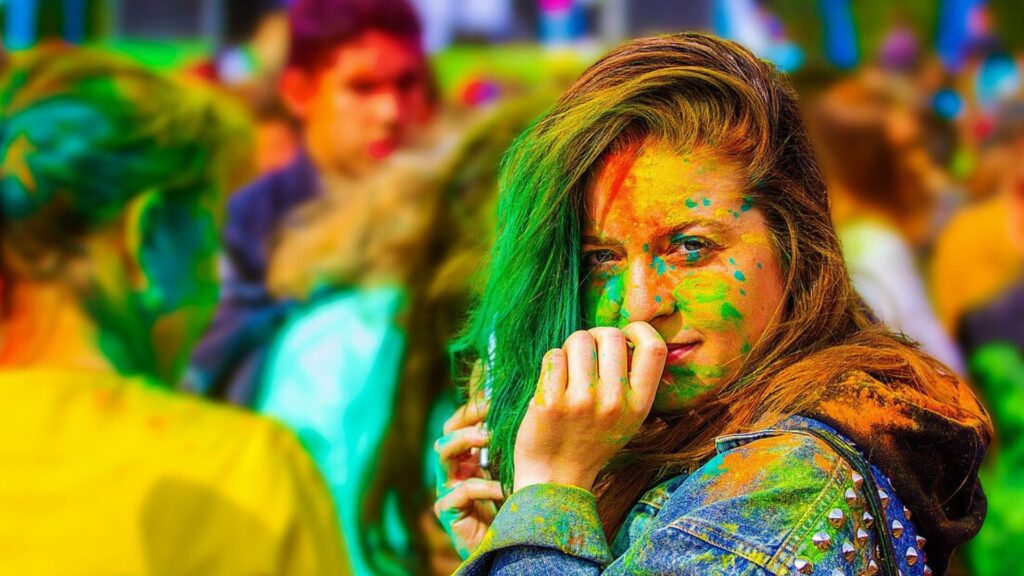
No account of India’s spring would be complete without Holi, the festival most readily associated with the season. While Holi has religious origins, its contemporary expression in many regions centres as much on community, colour and the simple exuberance of warmer days.
Celebrated in March, Holi coincides with the full moon and the agricultural calendar’s shift towards new crops. In cities such as Jaipur, Varanasi and Delhi, neighbourhoods erupt in clouds of powdered pigment, music and laughter. In the Braj region of Uttar Pradesh, festivities extend over several days, incorporating folk performance and traditional music.
For the visitor, Holi can be both joyous and overwhelming. When approached thoughtfully, ideally within curated settings that respect local customs, it offers a vivid demonstration of seasonal catharsis. Winter is not merely ending; it is being dismissed in colour.
A Country in Transition
Across these festivals, from temple courtyards in Madhya Pradesh to tea fields in Assam, a pattern emerges. Spring in India is not abstract. It is tied to land, labour and performance. Harvests dictate celebration. Climate shapes choreography.
For the well-heeled traveller seeking more than climate-driven escape, this is a season worth observing. Temperatures are forgiving, landscapes are luminous, and public life reclaims the outdoors.
India does not simply enter spring.
It stages it.
And in doing so, it invites the attentive visitor to witness a country adjusting its tempo with the sun.