
Rann Riders and the Landscape Nobody Expected
Gujarat suffers slightly from an image problem.
Mention the state internationally and conversations tend to drift towards textiles, stepwells, lions, business communities and perhaps the occasional enthusiastic discussion about vegetarian thalis.
All perfectly fair.
Yet somewhere beyond the better-known narratives lies another Gujarat altogether. A wilder one. A landscape shaped by salt deserts, migratory birds, pastoral communities and ecosystems so visually improbable they appear almost theatrical. This is the world surrounding the Little Rann of Kutch.
And at the edge of it sits Rann Riders. To describe it merely as a lodge would be rather insufficient. Rann Riders feels more like an ecological outpost designed for travellers who enjoy the notion of disappearing, temporarily at least, into landscapes most people know astonishingly little about.
The terrain here resists conventional expectations of wilderness. There are no dense forests or dramatic mountains. Instead, the landscape unfolds horizontally in immense silvery expanses where salt flats merge almost seamlessly with sky. At first glance, it appears empty. It is anything but.
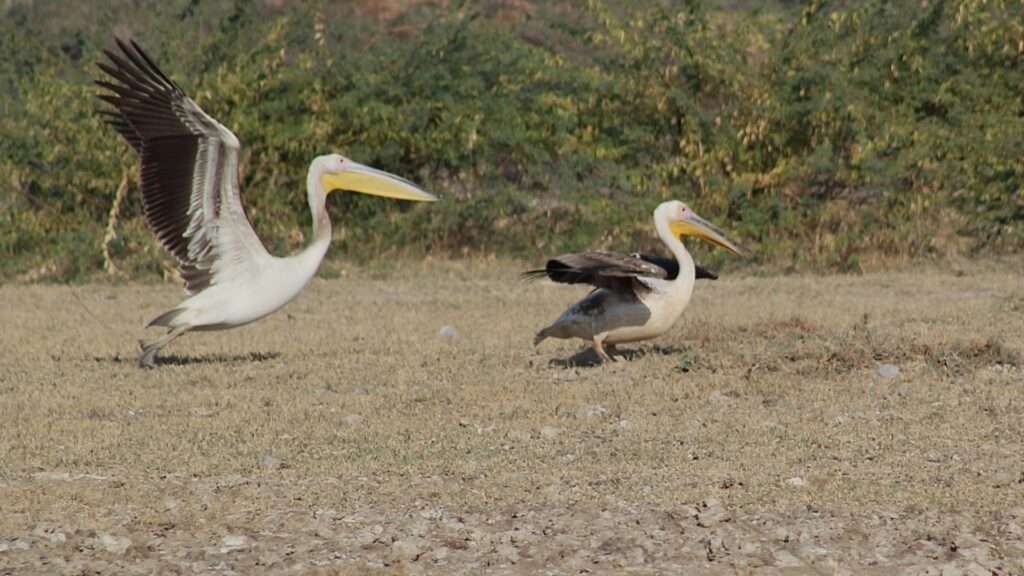
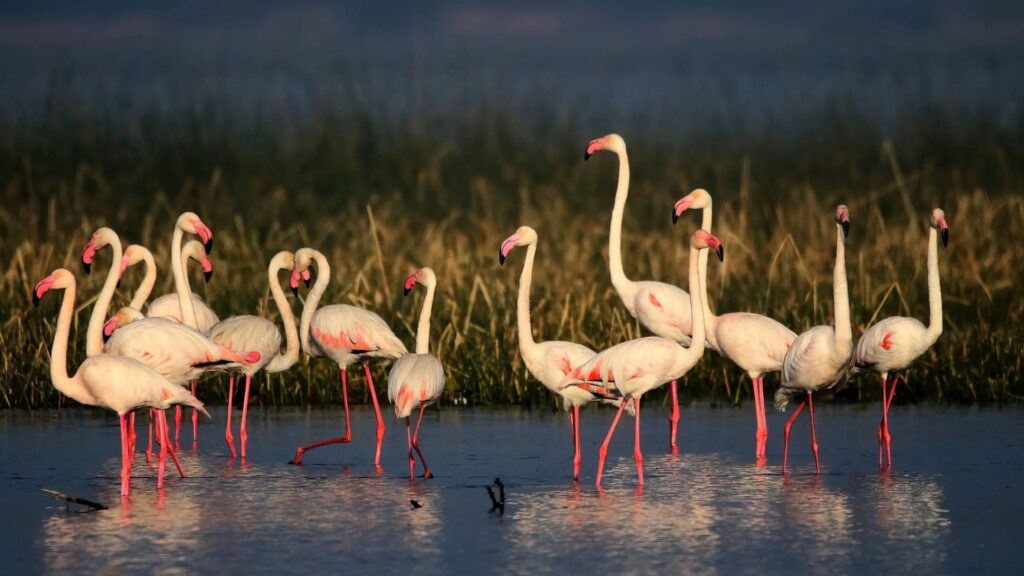
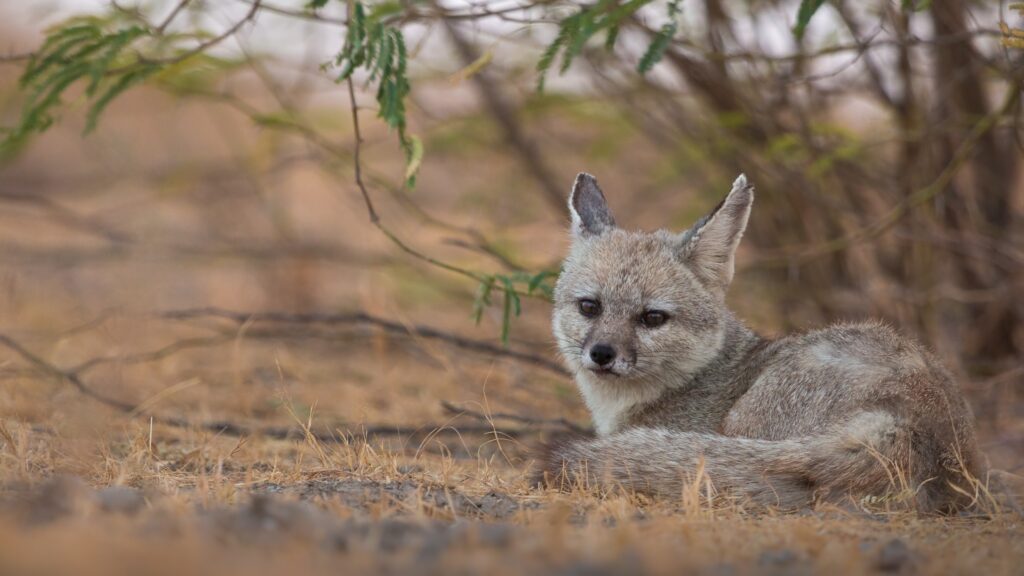
The Little Rann supports extraordinary biodiversity adapted to harsh ecological conditions. The endangered Indian wild ass moves elegantly across the desert plains with an almost aristocratic confidence. Flamingos gather in astonishing numbers during migration seasons. Desert foxes emerge cautiously at dusk. Harriers circle overhead while wetlands quietly sustain complex ecological systems beneath the apparent barrenness.
The beauty of this landscape reveals itself gradually. Which is perhaps why it remains so memorable. Rann Riders understands this rhythm exceptionally well. Built in the style of traditional local architecture, the lodge feels deeply integrated into its environment. Mud-plastered walls, vernacular design and indigenous landscaping create spaces that belong to the region rather than merely occupying it.
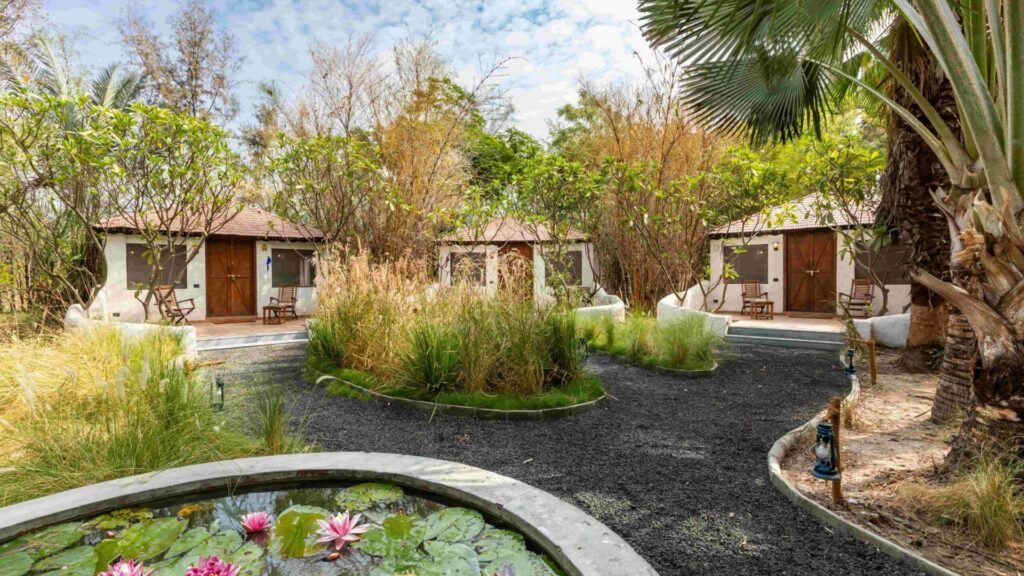
There is refreshingly little attempt to impose imported luxury aesthetics upon the desert. No unnecessary theatrics. No aggressively international interiors pretending one could be anywhere.
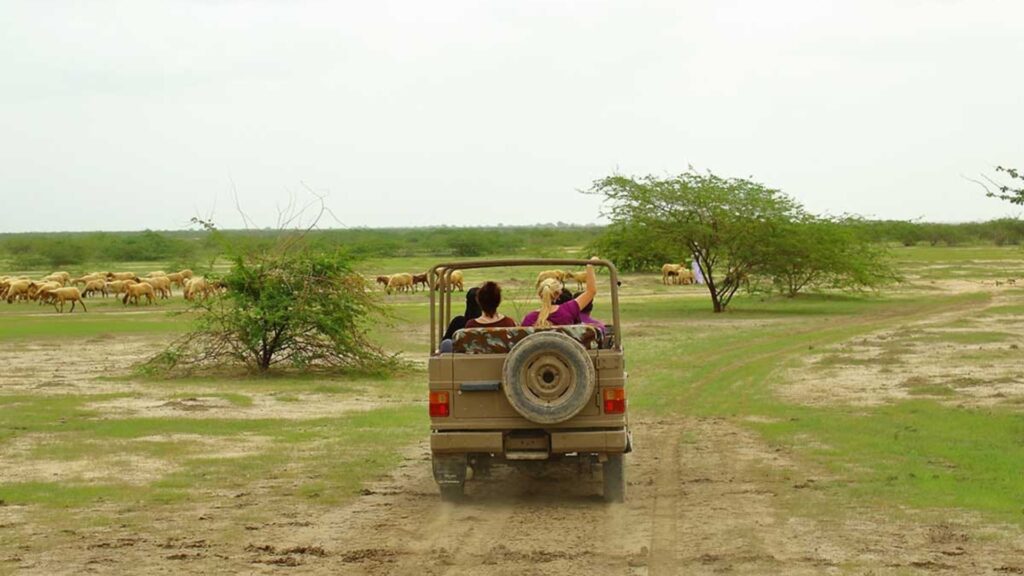
One is unmistakably in Kutch. And that matters. Hospitality at its best should deepen a traveller’s understanding of place, not dilute it into generic comfort. At Rann Riders, local communities remain central to the experience. Rabari and Bharwad pastoral traditions, textile crafts and rural livelihoods are not packaged as staged cultural entertainment but encountered as living realities of the landscape.
This creates something increasingly rare in contemporary travel. The surrounding ecosystem itself is ecologically fascinating. Seasonal wetlands attract migratory bird populations from Central Asia and Europe, transforming the region into one of India’s great avian spectacles. Birdwatchers arrive with alarming levels of enthusiasm and lenses of truly intimidating proportions.
They are rarely disappointed. Yet beyond biodiversity, there is also a profound stillness here. The desert changes one’s relationship with scale. Sunsets stretch impossibly wide across salt flats. Wind moves uninterrupted for miles. Nights arrive with extraordinary clarity, unpolluted by excessive artificial light.
One quickly realises how noisy modern life has become. The irony, of course, is that Gujarat’s quieter landscapes may now represent precisely the sort of travel sophisticated travellers increasingly seek.
Not overcrowded spectacle. Not itineraries designed for social media acceleration. But immersion within landscapes still capable of surprise. There is also something deeply optimistic about the Little Rann’s conservation story. Once dismissed as barren wasteland, the ecosystem is now recognised for its ecological significance. Conservation initiatives, sustainable tourism and local community engagement are gradually reshaping how the region is valued. Rann Riders has played an important role within that evolution.
By creating thoughtful tourism around an unconventional landscape, the lodge helps demonstrate that biodiversity exists far beyond postcard wilderness. Sometimes it survives in places we underestimated entirely. Which may be Gujarat’s greatest surprise of all.
Because beneath the state’s industrious reputation lies a landscape wonderfully untamed, ecologically rich and still gloriously under-discovered. A wild side the world, rather astonishingly, never saw coming.