
Why The Ultimate Travelling Camp Understands Wilderness Better Than Most Hotels
Luxury camping sounds, on paper, faintly contradictory.
The British, after all, spent decades perfecting the art of camping as a mildly uncomfortable exercise involving damp socks, collapsing tents, and existential regret during rainstorms. Glamping attempted to improve matters.
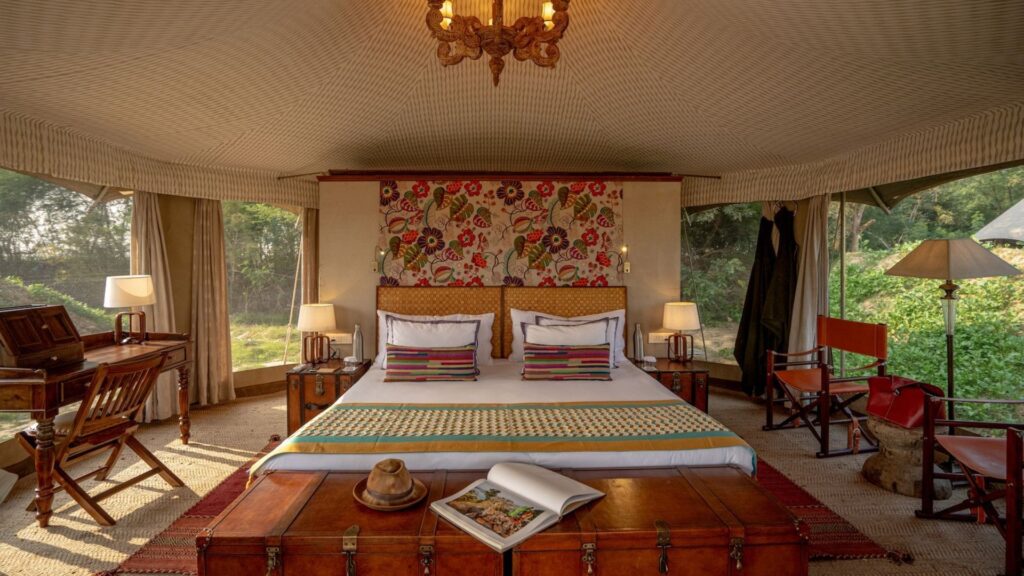
Sometimes successfully. Sometimes with deeply questionable results involving chandeliers suspended inside canvas structures, while guests pretend this somehow constitutes communion with nature. And then there is The Ultimate Travelling Camp.
TUTC approaches luxury camping with rather more intelligence.
Particularly in Bandhavgarh and Ranthambhore, where the camps manage to achieve something rare: experiences that genuinely deepen one’s relationship with wilderness rather than insulating guests from it entirely. This distinction matters enormously. Because the finest safari experiences are not about reproducing five-star urban comfort in forests. They are about immersion.
At TUTC’s camps, the canvas architecture creates a fascinating psychological shift. Unlike permanent concrete structures, tents feel inherently permeable to landscape. One hears the forest more acutely. Wind moves differently. Dawn arrives more gradually. The sounds of nocturnal life remain present rather than politely excluded behind thick hotel walls.
In Bandhavgarh, where tiger densities remain among the highest in India, this proximity to wilderness creates an extraordinary atmosphere. Mornings begin before sunrise, often accompanied by the distinctly uncivilised alarm calls of langurs and peacocks already engaged in forest gossip. Mist hangs low across grasslands while naturalists quietly prepare guests for safaris through landscapes where tigers move with astonishing confidence. Back at camp, however, comfort reasserts itself beautifully.
The tents are spacious without becoming ostentatious. Furnishings borrow from colonial safari aesthetics while remaining understated enough not to feel theatrical. One finds proper beds, thoughtful service, elegant dining, and all the civilised details required after several hours bouncing through forest tracks in pursuit of wildlife.
Ranthambhore offers a completely different ecological mood.
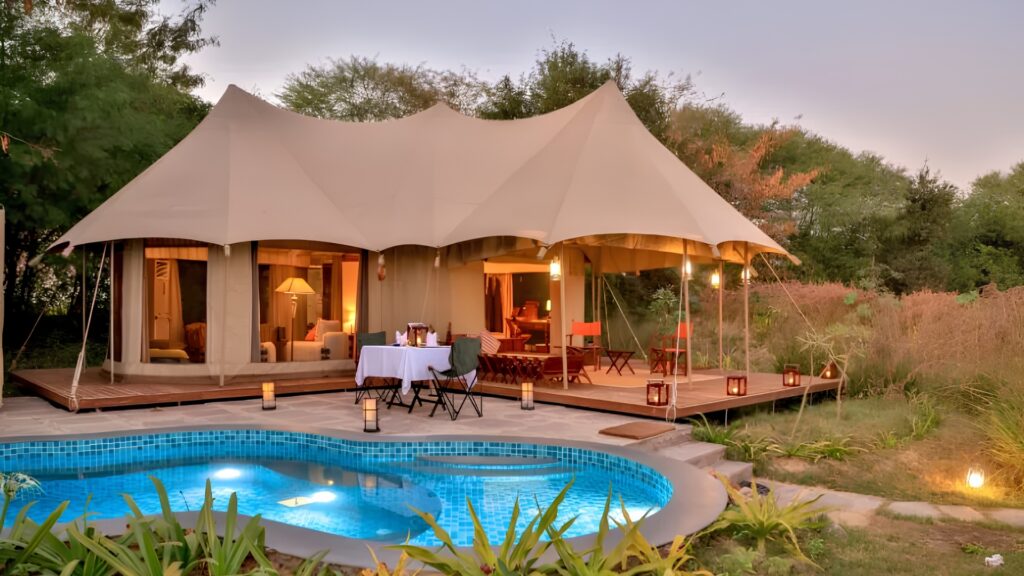
Here, the landscape feels almost mythic. Ancient ruins emerge unexpectedly through dry deciduous forests while lakes attract crocodiles, deer and spectacular birdlife. Tigers appear less as animals and more as sovereign presences moving through an old kingdom. TUTC’s camp mirrors this atmosphere beautifully.
Evenings acquire a certain cinematic quality. Lanterns glow softly against canvas. Conversations linger longer beneath open skies. One becomes unexpectedly aware of silence again. And perhaps that is the secret.
Glamping, when done correctly, is not about excessive luxury inserted awkwardly into nature.
It is about reducing friction between guest and landscape. TUTC understands this instinctively.
The camps retain enough elegance to feel indulgent while remaining sufficiently connected to wilderness to feel emotionally authentic. One never loses awareness of where one is. This is surprisingly rare.
Many luxury hotels located near national parks could, frankly, exist almost anywhere. Remove the wildlife photographs from the lobby walls and one might easily mistake them for upscale resorts in entirely different countries. TUTC avoids this homogenisation. The camps feel inseparable from their surroundings.
There is also a sustainability argument quietly embedded within the model. Luxury camps, when responsibly managed, can maintain lighter ecological footprints than large permanent developments. Their relative flexibility allows sensitive positioning within landscapes while minimising intrusive construction. Of course, this depends entirely on execution.
Done badly, glamping risks becoming environmental theatre. Done thoughtfully, it offers one of the most immersive ways to experience wilderness. Which is why TUTC occupies such an interesting position within Indian luxury travel. It represents a return to something older.
The romance of the expedition. The elegance of temporary camps. The thrill of moving through landscapes with a degree of humility rather than domination. And increasingly, travellers appear hungry for precisely this kind of experience.
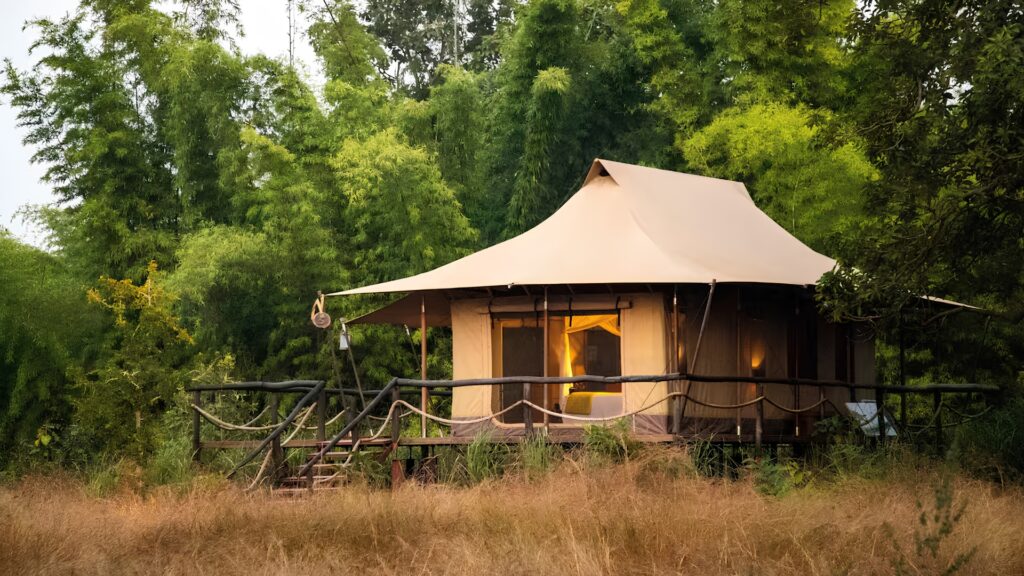
Not merely comfort, but atmosphere, memory, narrative. The sort of journeys that continue resurfacing in conversation years later. Because long after guests forget thread counts or minibar selections, they remember waking beneath canvas to distant alarm calls echoing through Indian forests.
One suspects that is exactly as it should be. Beyond creature comforts, TUTC offers something considerably more valuable. A reminder that wilderness is best experienced not from behind glass, but from within earshot.