
Unravelling Bhutan through its cuisine
Bhutan is often described in terms of landscapes and philosophy. Visitors speak of mist-draped valleys, monasteries clinging to cliffs, and a national outlook that famously values happiness over economic metrics. Yet there is another way to understand the Dragon Kingdom, one that reveals itself not in temples or treks but at the dining table.
Bhutanese cuisine is a study in character. It is bold, elemental and unapologetically rooted in the land. For travellers accustomed to the refinement of European gastronomy or the delicate balance of East Asian cooking, Bhutan’s food offers a refreshing honesty. Ingredients are local, flavours are assertive, and meals are often shaped as much by geography as by tradition.
One of the most thoughtful places to encounter this culinary heritage is The Postcard Dewa, where the philosophy of the kitchen reflects the rhythms of Bhutan itself.
A Cuisine Defined by Landscape
Bhutan’s topography dictates much of what appears on the plate. Steep mountain valleys and high-altitude farms favour hardy crops rather than delicate produce. Buckwheat thrives where wheat cannot. Red rice grows in terraced fields watered by glacial streams. Chillies flourish in abundance, forming the backbone of many dishes.
At The Postcard Dewa, this relationship between land and food is not merely acknowledged; it is celebrated. The kitchen works closely with local producers to ensure that the menu reflects Bhutan’s agricultural traditions. Rather than importing ingredients to mimic international cuisines, the philosophy here is to showcase what Bhutan grows best.
The result is a culinary experience that feels authentic rather than curated.
Ema Datshi: Bhutan’s National Comfort
Any exploration of Bhutanese cuisine inevitably begins with Ema Datshi, a dish that occupies a place in the national psyche similar to that of pasta in Italy or ramen in Japan.
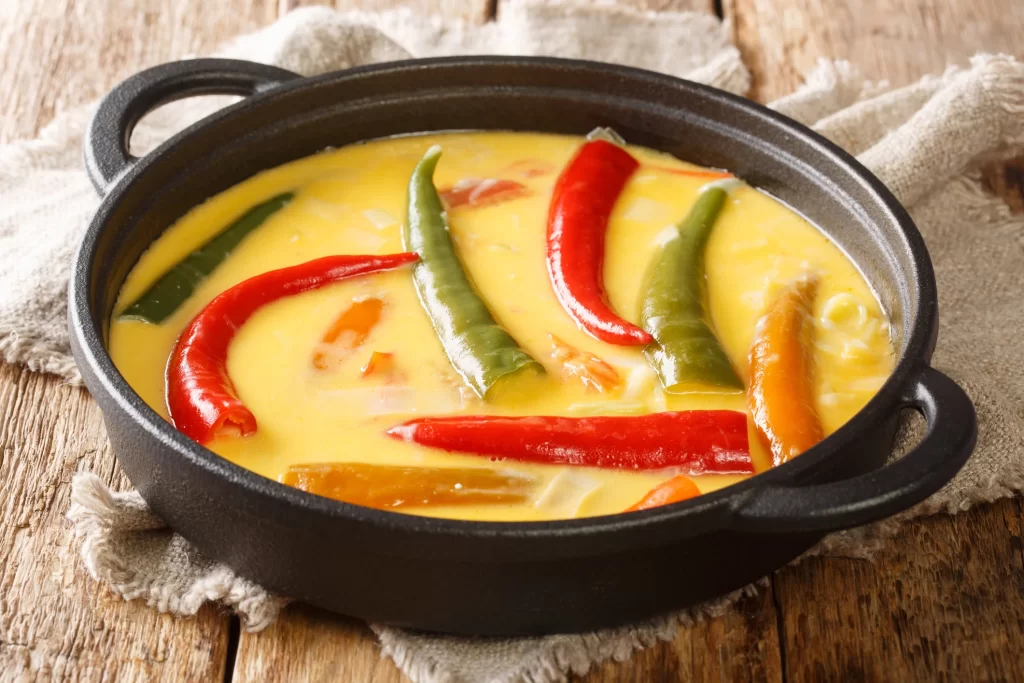
At first glance the preparation appears simple: chillies cooked slowly with local cheese to create a rich, comforting stew. Yet the dish reveals remarkable depth. The chillies provide warmth rather than aggression, while the cheese lends a creamy softness that balances the heat.
At The Postcard Dewa, Ema Datshi is prepared with careful attention to regional nuance. The dish becomes more than a staple; it becomes a conversation about Bhutanese identity.
Maru and the Art of Simplicity
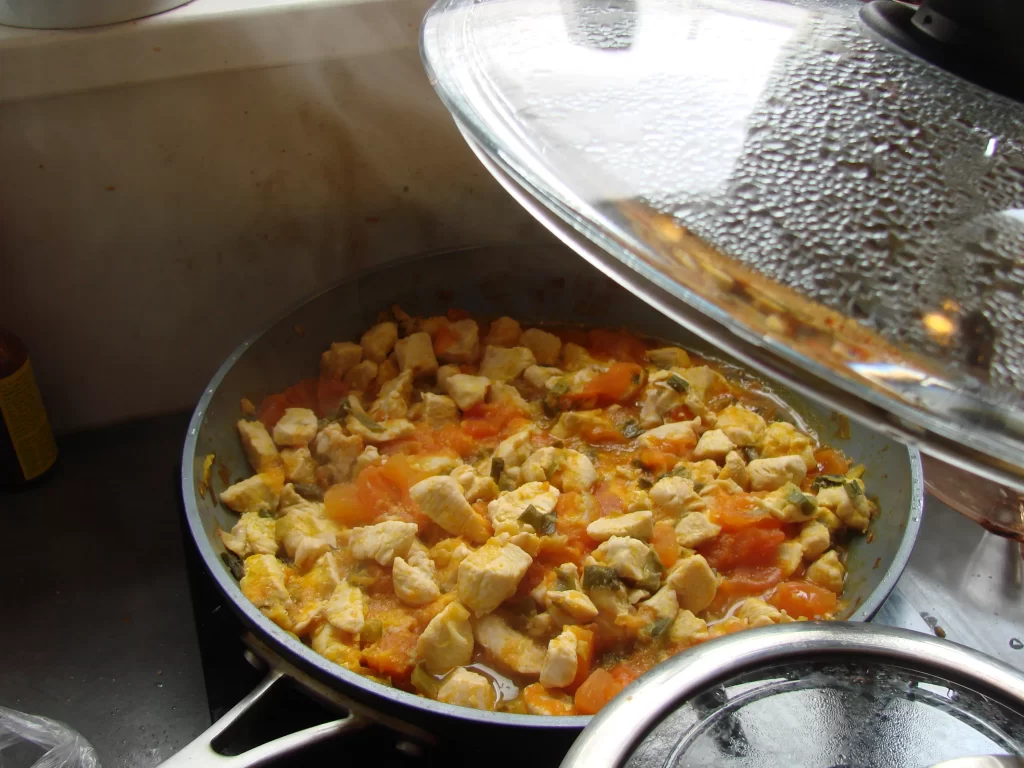
Another favourite that often appears on the table is Maru, a traditional dish of minced meat simmered with garlic, ginger and chillies. It is hearty without being heavy, the flavours layered rather than elaborate.
In Bhutan, Maru is the sort of dish that might appear in a farmhouse kitchen after a long day in the fields. At The Postcard Dewa, it retains that comforting simplicity while benefiting from careful sourcing and thoughtful preparation.
The dish captures an essential truth about Bhutanese cooking: flavour comes from freshness and balance rather than complexity.
Paksha Paa: The Soul of Bhutanese Cooking
If Ema Datshi is Bhutan’s national comfort food, Paksha Paa represents its deeper culinary tradition. The dish combines tender pork with red chillies and earthy mountain vegetables, producing a robust flavour that mirrors the country’s rugged terrain.
Served with Bhutanese red rice, Paksha Paa reveals the essence of the cuisine. The rice itself is distinctive, slightly nutty in flavour and more substantial than the polished white grains common elsewhere in Asia.
At The Postcard Dewa, this pairing forms the centrepiece of many meals, grounding the dining experience firmly in Bhutan’s culinary heritage.
Ingredients That Tell a Story
The strength of Bhutanese cuisine lies in its ingredients, and the kitchen at The Postcard Dewa treats them with quiet reverence.
Buckwheat, grown in the cooler highland regions, appears in breads and pancakes that accompany meals. Bhutanese chillies, famous for their intensity, are used with surprising restraint to create warmth rather than fire.
Perhaps the most evocative ingredient is mountain trout, sourced from the island’s clear rivers. Fresh, delicate and subtly flavoured, it reflects the purity of Bhutan’s natural environment.
Together, these elements form a cuisine that is unmistakably tied to place.
A Table that Reflects a Culture
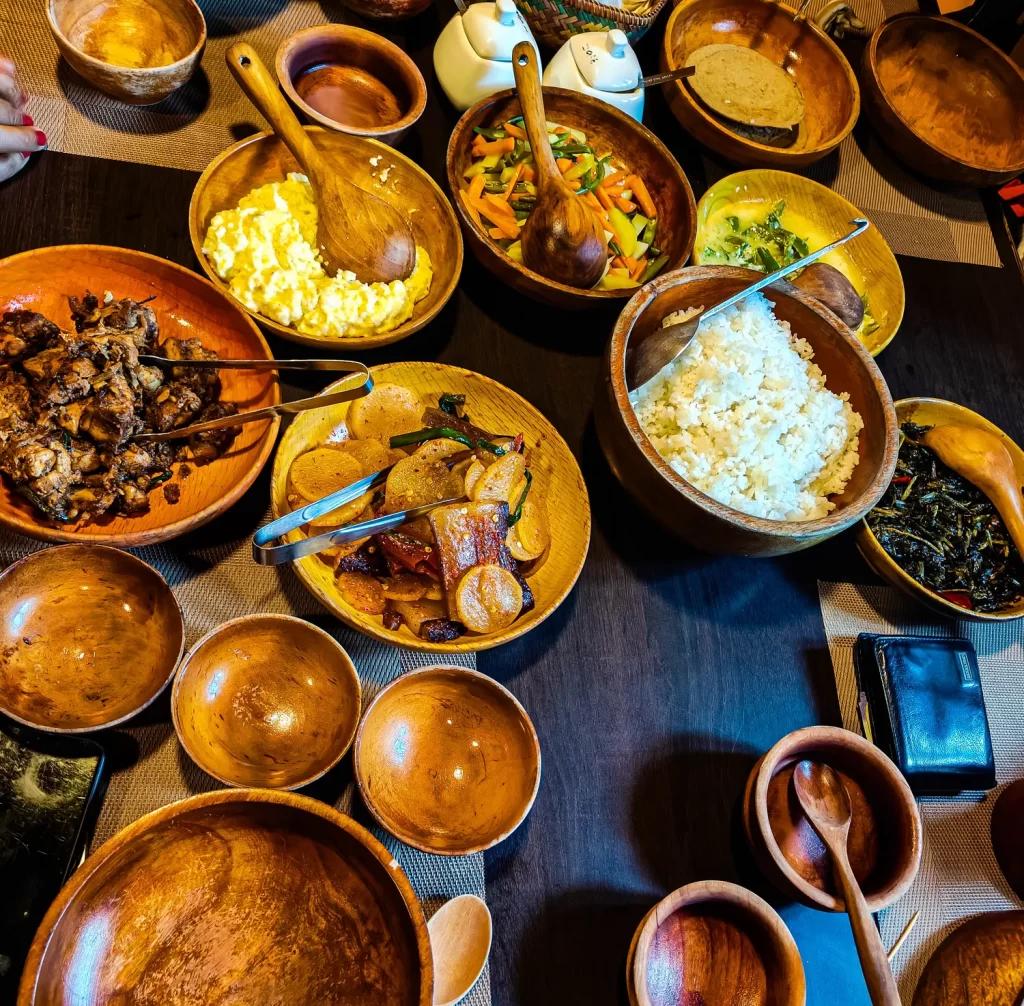
Dining at The Postcard Dewa is not about culinary theatre. There are no elaborate tasting menus or grand gastronomic gestures. Instead, the experience unfolds through dishes that feel deeply personal and culturally rooted.
Meals often stretch into long conversations, punctuated by shared plates and the quiet satisfaction of food that has travelled only a short distance from farm to kitchen.
For travellers seeking to understand Bhutan beyond its monasteries and mountain trails, the table offers an unexpected insight.
Bhutan, Through Its Flavours
Bhutan’s cuisine reflects the country’s wider philosophy: respect for nature, a preference for simplicity, and an appreciation for what the land provides.
At The Postcard Dewa, these ideas are translated into a dining experience that feels both authentic and quietly refined. The kitchen does not attempt to reinterpret Bhutanese food for international tastes. Instead, it invites guests to experience it as it is meant to be enjoyed.
In doing so, it reveals something essential about the Dragon Kingdom.
Bhutan may be known for its landscapes and spirituality. Yet it is through its food that the country often speaks most directly.
And once tasted, its flavours linger long after the journey ends.