
Where ancient wisdom meets modern discernment
Wellness, as a word, has suffered from overuse. In many corners of the world, it has been reduced to spa menus and detox juices, a decorative accessory to luxury travel rather than its substance. In India, however, wellness has always been something more complex and layered, embedded in philosophy, ritual, food, movement and landscape. To travel through the Subcontinent with wellness in mind is not to visit a single retreat, but to encounter a fabric of practices that have evolved over millennia.
The discerning traveller arriving in India today will find that wellness is no longer confined to the ashram or the clinic. It is unfolding across forests, palaces, mountain lodges, and coastal retreats. To understand it properly, one must first deconstruct it.
Ayurveda: The Science of Balance
Long before the global wellness industry found its vocabulary, India had Ayurveda, a system of medicine and lifestyle that traces its roots to texts more than two thousand years old. At its core lies a deceptively simple principle: health is not the absence of illness, but the equilibrium of body, mind and environment.

Kerala remains the epicentre of this tradition, and few hospitality groups have explored its depth with greater sincerity than CGH Earth. Their Ayurvedic programmes are not mere indulgent spa treatments but carefully structured therapies guided by physicians, dietary regimes, and daily rituals that follow classical Ayurvedic principles.
At SpiceTree Resorts and Tamara Leisure Experiences, the approach is similarly thoughtful. Here, wellness is presented as a return to rhythm. Days unfold slowly. Meals are seasonal and local. Therapies are prescribed rather than selected from a brochure.
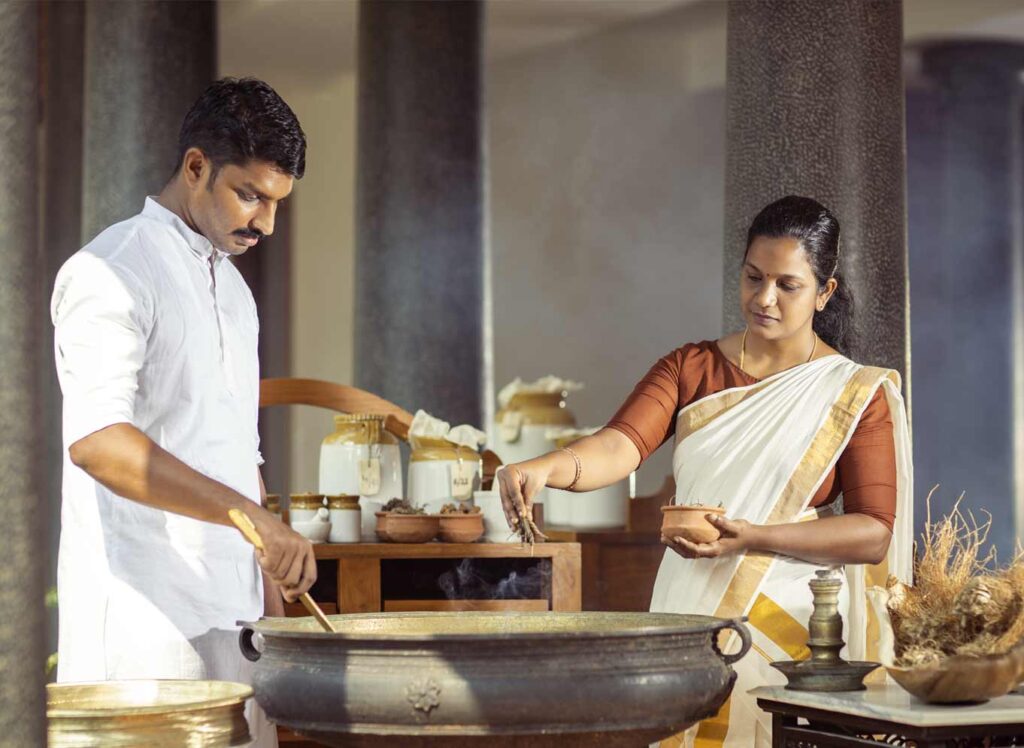
Further south, Niraamaya Retreats brings a contemporary sensibility to the Ayurvedic tradition. Their coastal and hilltop properties weave classical treatments with modern luxury, allowing guests to experience the discipline of Ayurveda without sacrificing comfort.
In these settings, wellness becomes a way of inhabiting time an enduring lifestyle.
Yoga: The Discipline of Stillness
Yoga’s journey from ancient philosophy to global phenomenon has been remarkable, though often misunderstood. In India, yoga was never intended merely as physical exercise. It is a discipline of awareness, combining breath, posture and meditation in pursuit of clarity.
For travellers seeking a deeper engagement with the practice, destinations such as Rishikesh along the Ganges remain a natural draw. Properties like Ganga Kinare Resorts offer a setting where yoga unfolds in its original context, against the backdrop of river rituals and Himalayan foothills.
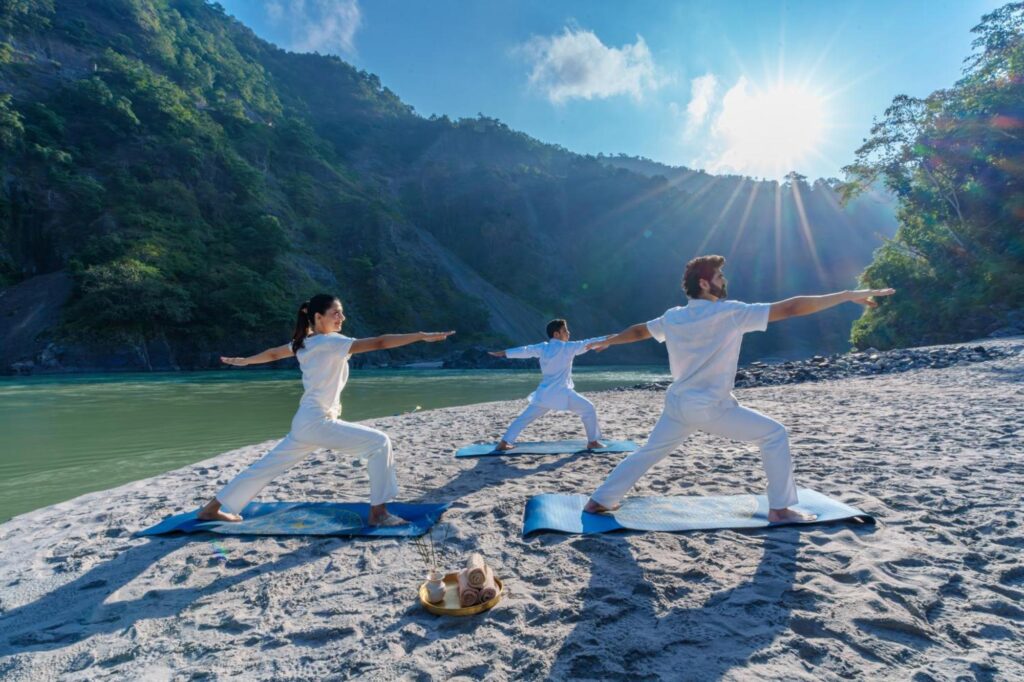
Elsewhere, yoga appears not as a retreat activity but as a quiet daily ritual. At Xandari, surrounded by lush tropical landscapes, yoga sessions take place in open pavilions where birdsong replaces studio music. At Trivik, perched high in the Western Ghats, the practice becomes a way of attuning oneself to the mountain air and mist-laden valleys.
Here the traveller discovers that yoga is the art of balance, not merely your physical self, but your mind, body and soul.
Active Wellness: Movement as Renewal
While introspection has long been central to Indian wellness traditions, the contemporary traveller increasingly seeks vitality as well as stillness. Movement, adventure and exploration have become integral to the wellness journey.
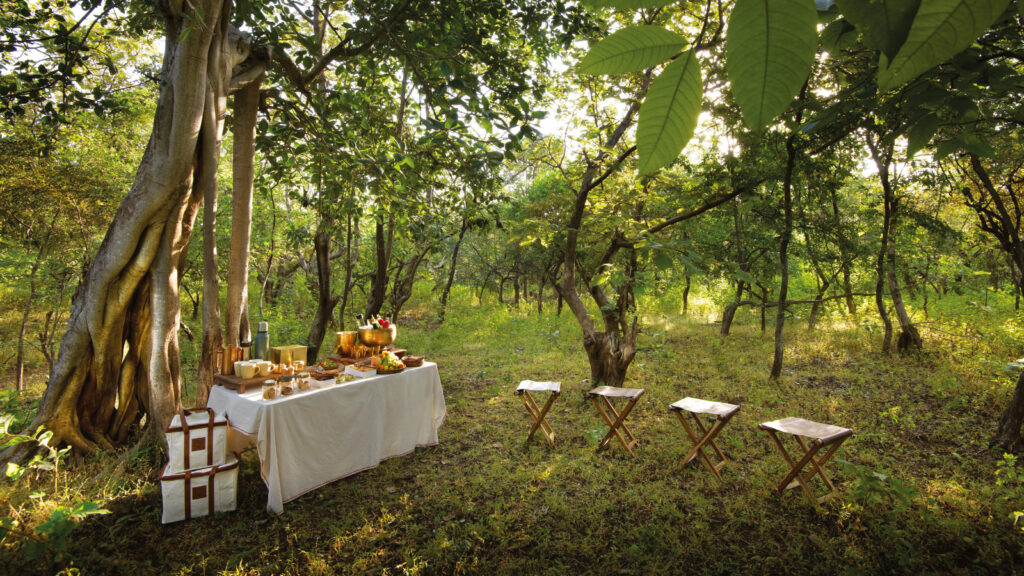
Even safari lodges contribute to this active dimension of wellness. At Aramness in Gir and Red Earth in Kabini and Tadoba, early morning walks in the forest begin at sunrise, placing travellers within landscapes that demand attentiveness and patience. The experience is invigorating in ways no treadmill can replicate.
Wellness here is found in movement through wilderness.
Nature as Medicine
If there is a single thread connecting India’s many wellness traditions, it is the belief that nature itself is restorative. Forests, rivers and mountains are not merely scenic backdrops but active participants in healing.
Few places embody this philosophy more gracefully than the retreats of CGH Earth Saha, where architecture dissolves into surrounding ecosystems and guests move through environments designed to minimise intrusion.
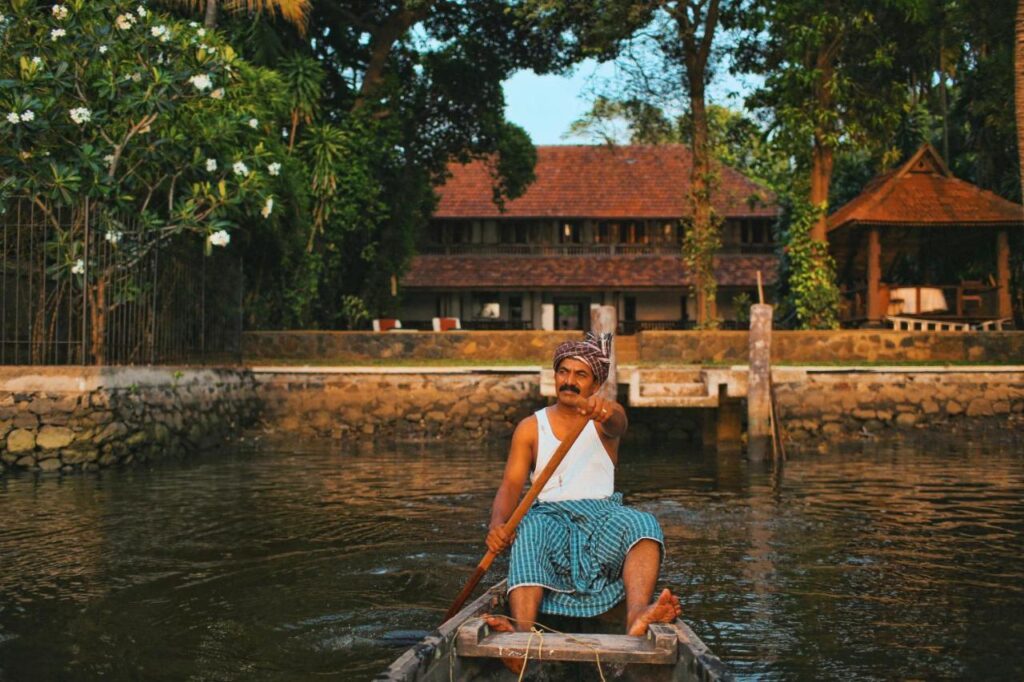
At Tamara Leisure Experiences, coffee plantations and dense forests create an atmosphere where silence becomes a luxury in its own right. Time slows, the senses sharpen, and the mind recalibrates.
Coastal retreats such as Ahilya by the Sea, part of the Ahilya Experiences collection, offer a different form of restoration. Here the Arabian Sea becomes a constant companion, its rhythms subtly influencing daily life.
In these environments, wellness emerges organically from the landscape itself.
The Future of Wellness in India
What distinguishes India’s wellness offering is not novelty but the simplicity of continuity. Many of the practices now celebrated by the global travel industry have existed here for centuries. What is changing is the way they are presented to travellers.
The most thoughtful hotels understand that wellness cannot be reduced to a checklist of treatments. It must be woven into the architecture of the journey itself. Food, landscape, ritual, conversation, and movement all contribute to the experience.

The Subcontinent, with its extraordinary diversity of climates and traditions, offers an ideal canvas for this holistic approach. One may begin with Ayurvedic therapies in Kerala, continue with yoga beside the Ganges, hike through Himalayan forests, and conclude with meditation overlooking the sea.
Such journeys resist categorisation. They are neither purely medical nor purely indulgent. They are something subtler. Ultimately, wellness in India is a way of life. And perhaps that is its greatest luxury.