
Temples, caves, rivers and the long memory of the heartland
Madhya Pradesh does not reveal its cultural richness in a single grand gesture. It accumulates.
A temple here. A painted cave there. A river town, a fort, a palace, a stupa, a market, a shrine, a local craft tradition. Slowly, the state begins to feel less like a destination and more like an archive, one that has been written across stone, landscape, ritual and memory.
This is the great pleasure of travelling through Madhya Pradesh. Its heritage is not confined to one era or one aesthetic. It stretches across prehistoric, Buddhist, Hindu, Islamic, tribal, royal and colonial histories, often within a few hours of one another.
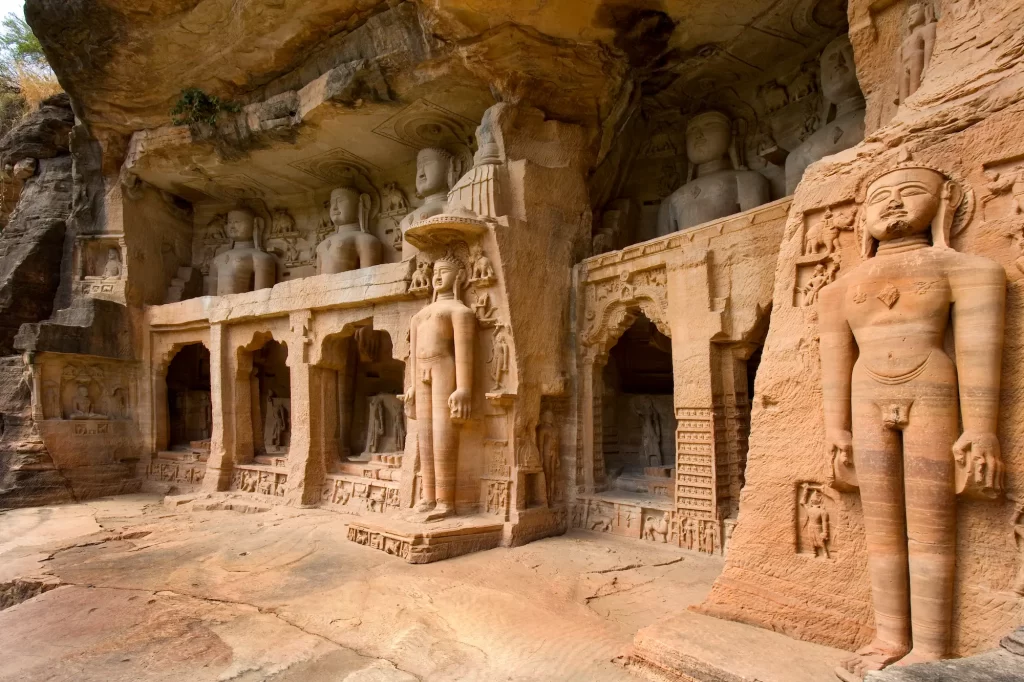
At Bhimbetka, rock shelters preserve some of the earliest known traces of human expression in the Indian subcontinent. The paintings are not grand in scale, but they are profound in implication. Long before museums, catalogues and curators, humans were already recording movement, animals, ritual and daily life on stone.
At Sanchi, one encounters one of the most important Buddhist sites in India. Its great stupa and carved gateways speak not only of faith, but of artistic discipline and imperial patronage. The site has a stillness that feels remarkably contemporary, as if good architecture has always understood the value of restraint.
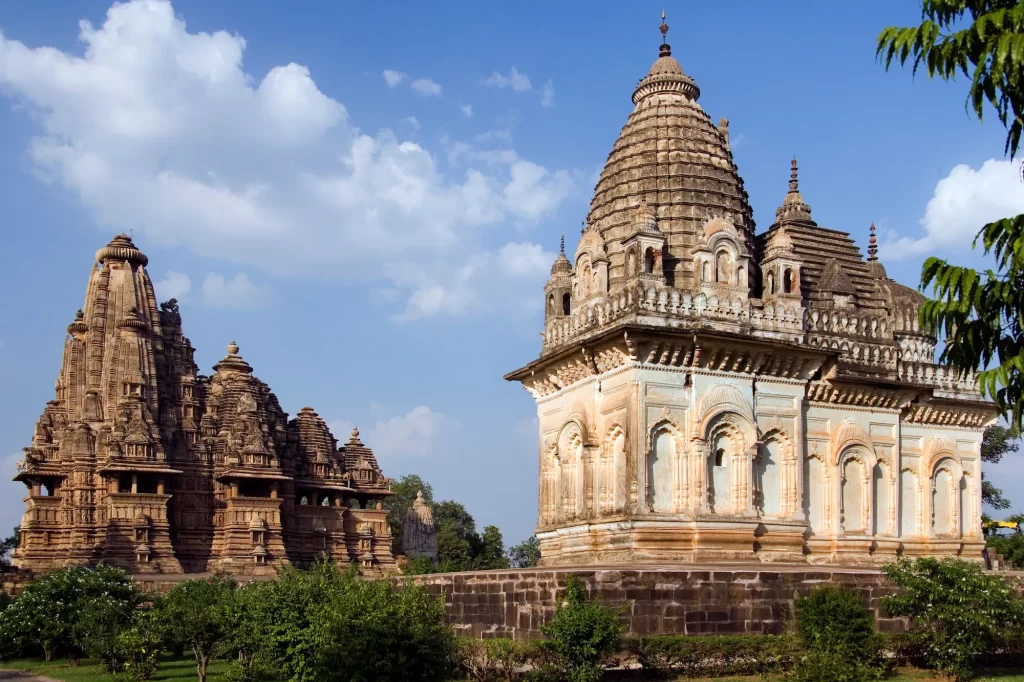
Then there is Khajuraho, often reduced in lazy shorthand to its erotic sculptures. This is a disservice, a persistent one at that. The temples are among India’s great achievements of form, movement and symbolism. Their sculptural world contains gods, musicians, dancers, celestial beings, domestic scenes and yes, erotic imagery, all part of a wider philosophical and artistic universe. To rush through Khajuraho in search of only the famous panels is to miss the greater composition. A very human mistake, but a mistake, nonetheless.
Mandu offers another mood altogether. Set amid ruins, palaces, pavilions, and water structures, it is a landscape of romance and melancholy. Jahaz Mahal, Hindola Mahal and the stories of Baz Bahadur and Rani Roopmati give Mandu a hauntingly atmospheric quality. It is one of those places where history seems to linger in the air, helped along by good light and a little imagination.
In Maheshwar, the Narmada River becomes both setting and soul. The ghats, fort, temples and celebrated weaving tradition associated with Maheshwari textiles make it one of Madhya Pradesh’s most elegant cultural stops. Here, craft is not a souvenir category. It is a living tradition tied to patronage, livelihood and place.
Bhopal adds yet another layer. With its lakes, mosques, palaces, and the remarkable legacy of the Begums of Bhopal, the city deserves far more attention than it often receives. Its history of female rule, civic vision and cultural refinement offers one of India’s most compelling urban stories.
This is the Madhya Pradesh that rewards slower travel. Not the Madhya Pradesh of hurried transfers between safari lodges, but the one that invites travellers to connect wilderness with civilisation, ancient art with living craft, sacred geography with architecture, and food with memory.
For travel designers, the opportunity is considerable. Madhya Pradesh can be shaped as a cultural journey, a wildlife circuit, a textile route, a river story, a heritage trail or a combination of all of these.
The state does not demand one narrative.
It offers many, and trusts the thoughtful traveller to notice.